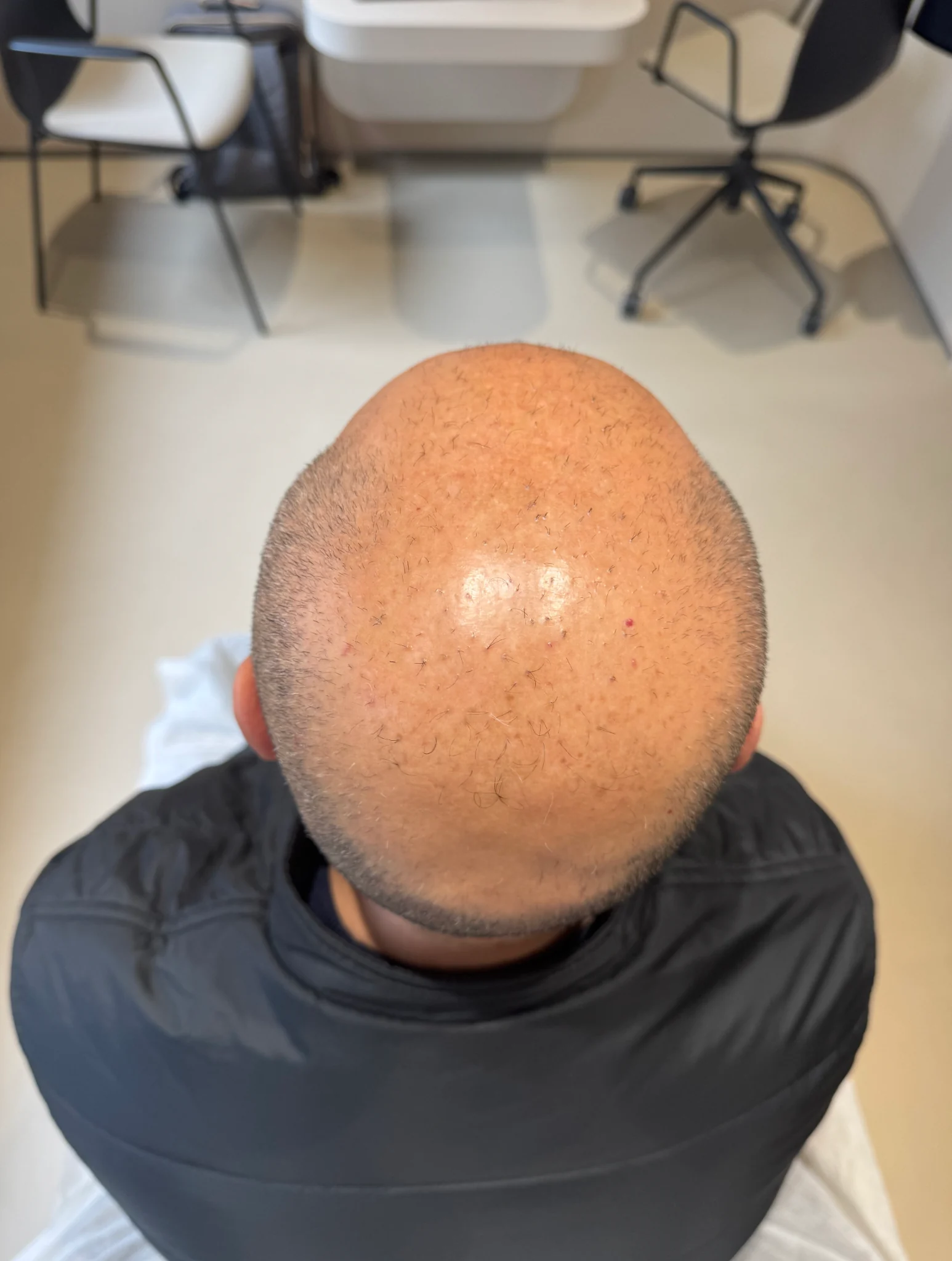
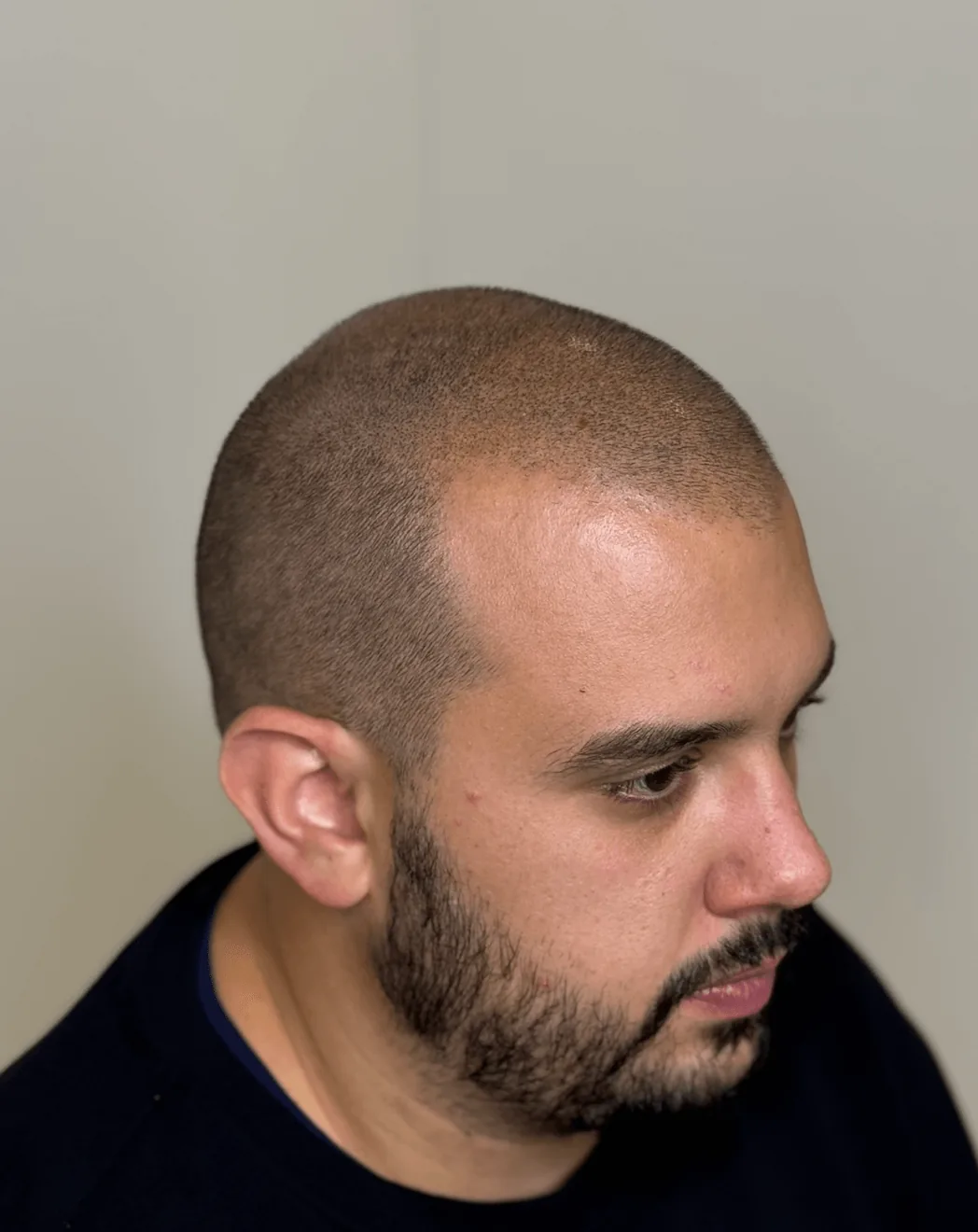
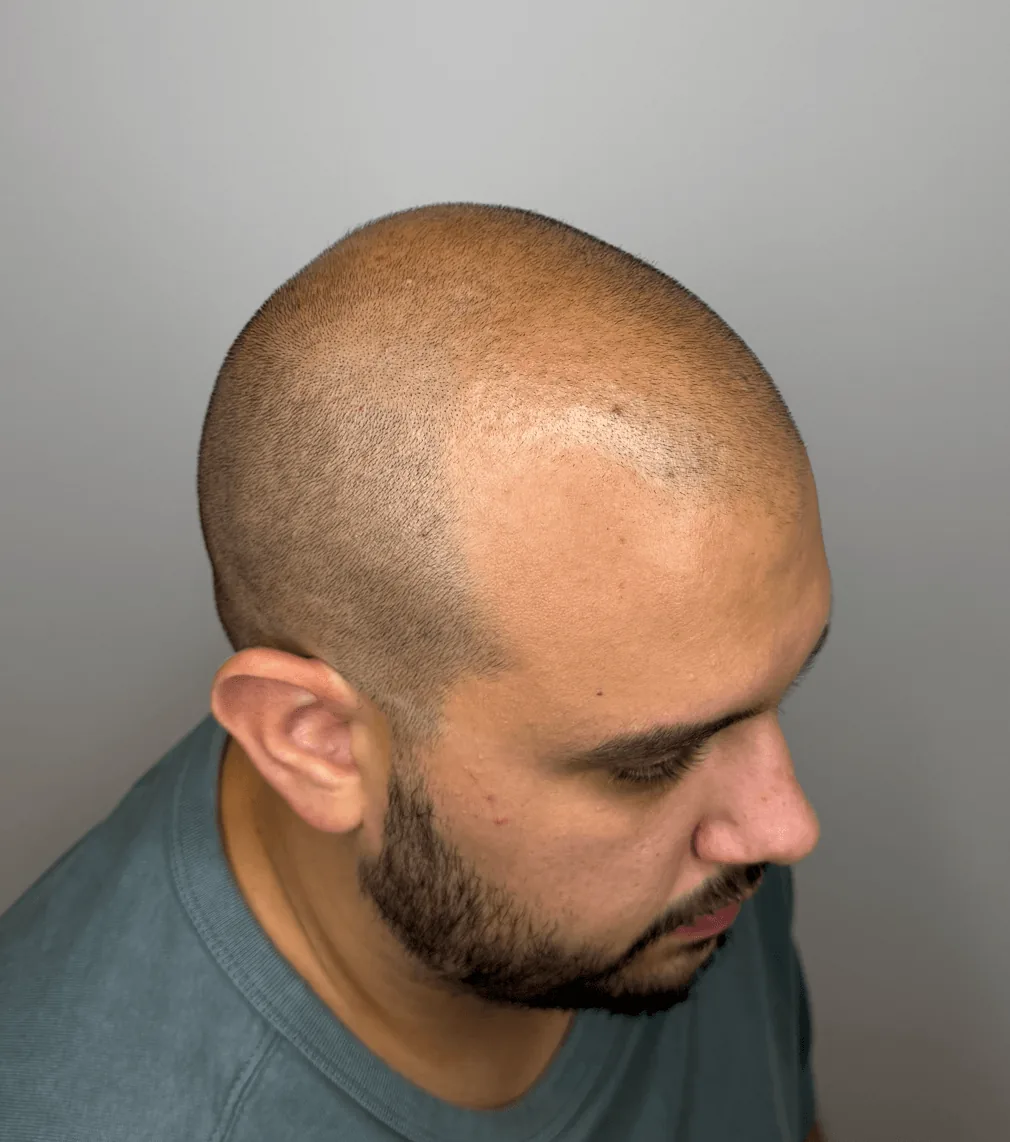
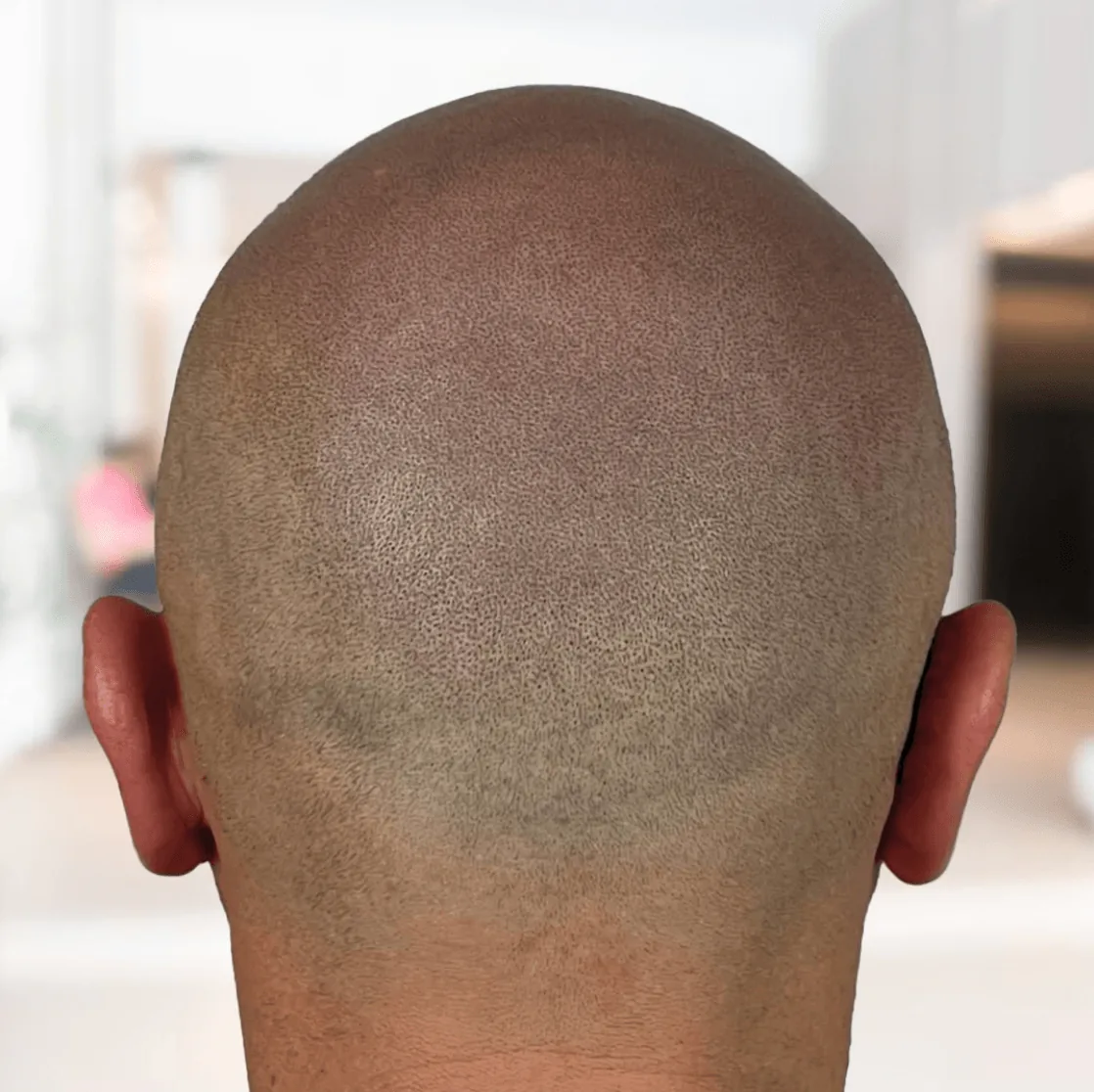
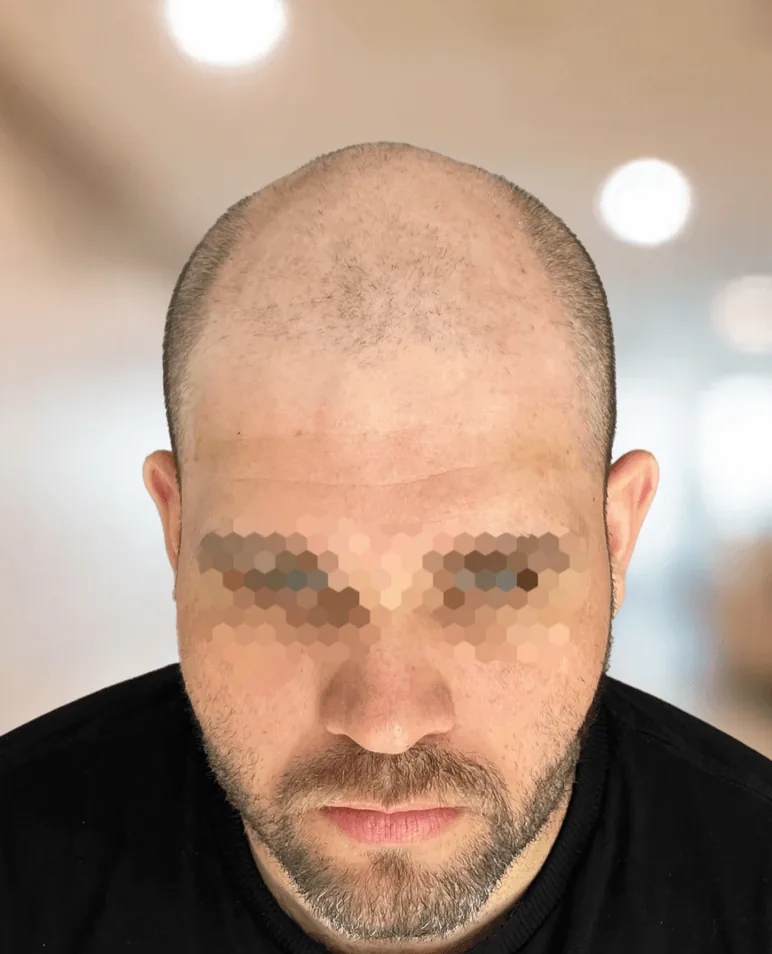
What is the shaved effect?
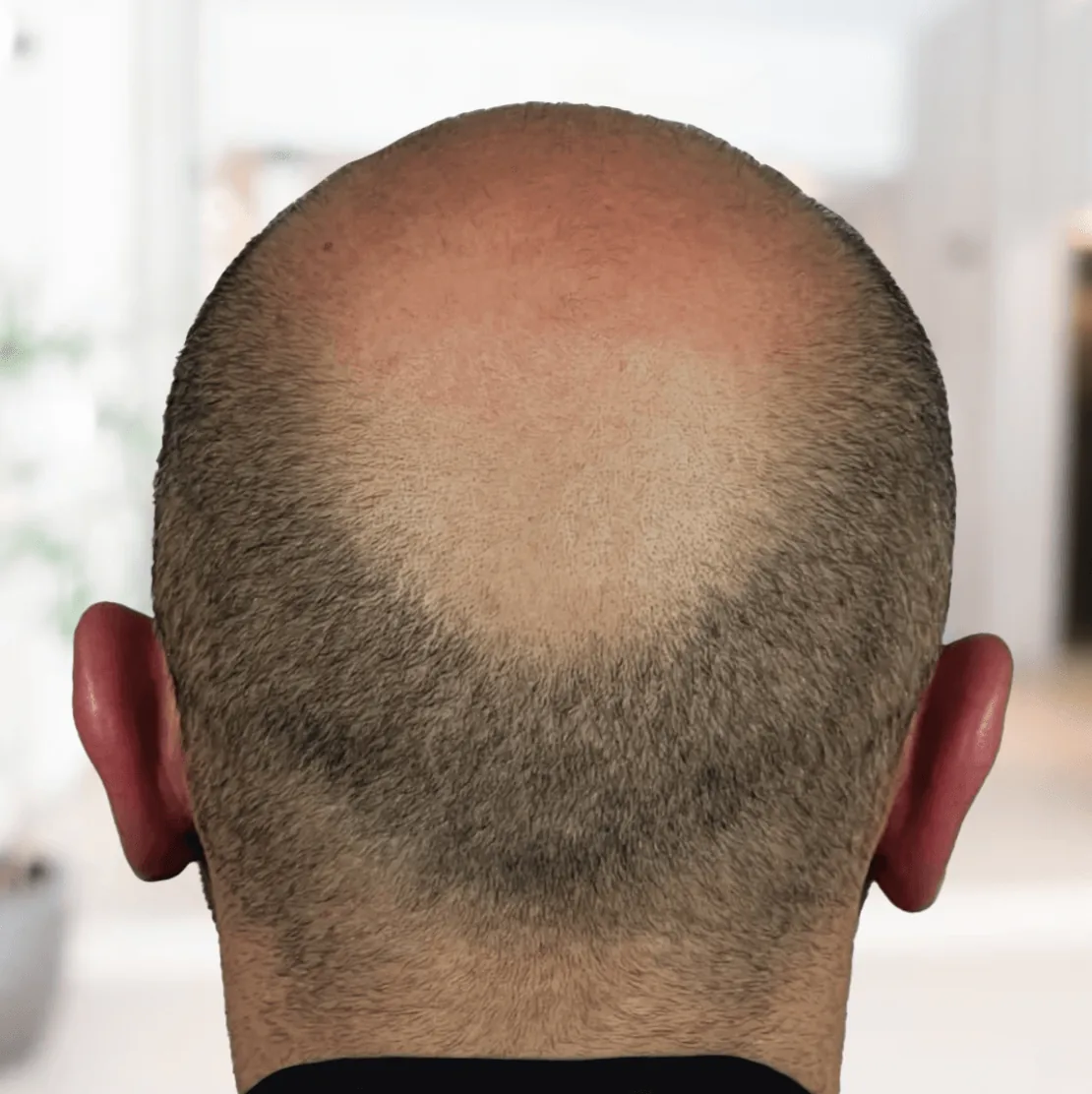
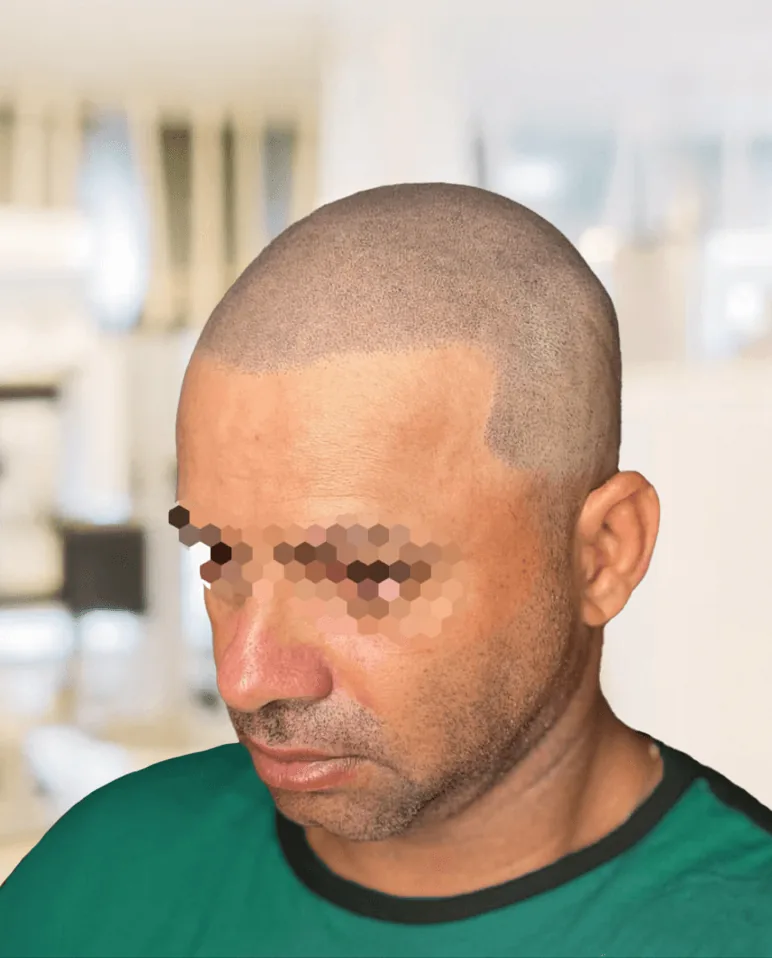
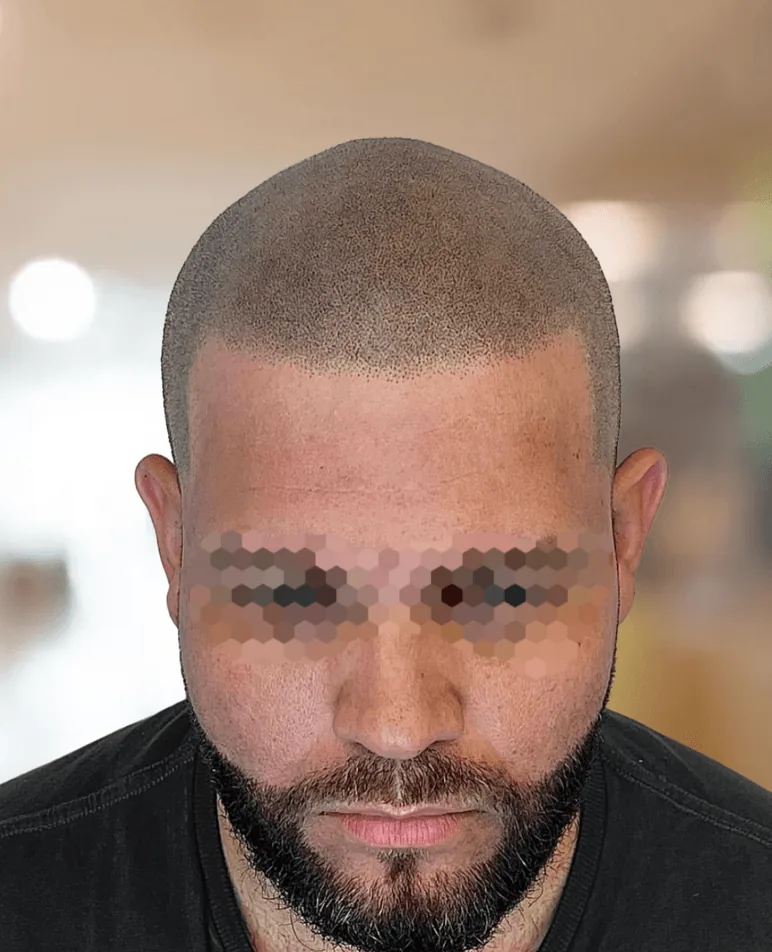
This is the type of scalp micropigmentation in which pigment is used to recreate the appearance of visible follicles on a shaved or very short scalp. The result should read as hair, not as a pigmented surface.
The hairline should not look drawn on
A hairline that is too straight, dark or compact can make the result look harsh. The design should take age, facial structure, recession, lateral density and future evolution into account. The frontal transition usually requires a more open, progressive distribution.
How visual depth is created
It is built in layers and sessions. The first layer establishes structure; later layers make it possible to reinforce density, integrate areas and correct small differences once the way the skin heals has been observed.
Can it be combined with real hair?
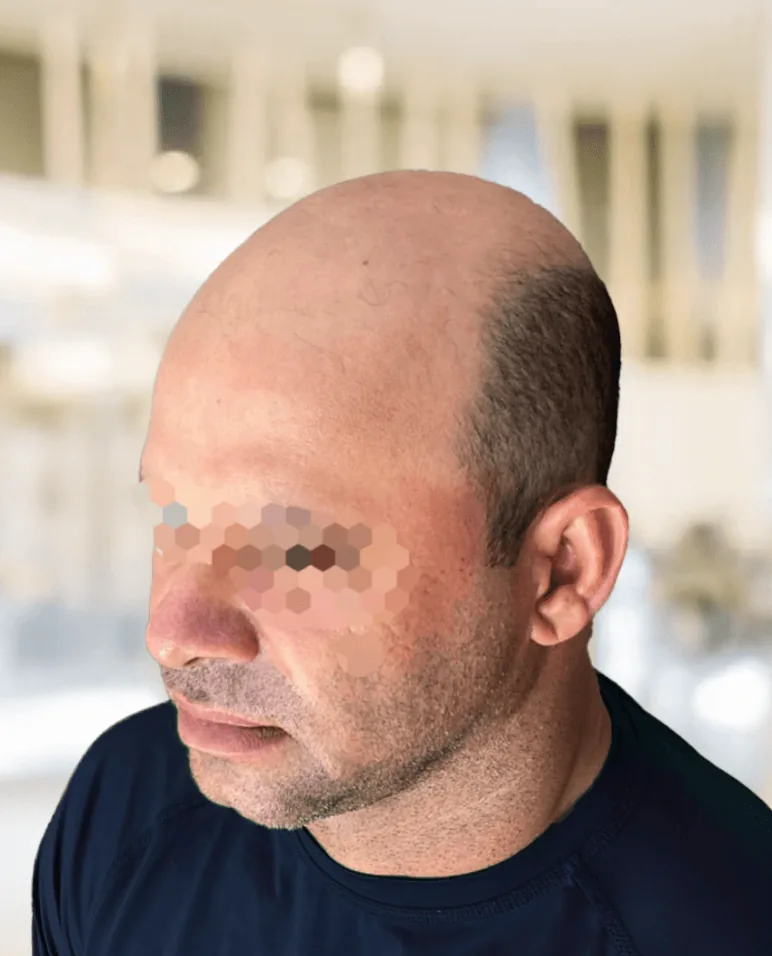
Yes, but the length and distribution need to be coherent. If hair remains in some areas and is absent in others, the design should visually unify the overall appearance.
Maintenance
Pigment loses intensity over time. The rate depends especially on skin type, sun exposure and habits. Touch-ups are assessed according to actual evolution rather than a fixed date for everyone.
Who is a shaved effect suitable for?
It can be considered for people with advanced alopecia, pronounced recession or areas with little coverage who want to wear their hair very short. It can also help integrate certain differences between areas with hair and areas without it, provided the overall design remains coherent.
Hairline design: natural appearance before perfection
A natural hairline should not look as though it was drawn with a ruler. Age, facial features, head shape and the existing hair pattern determine its height, shape and transition. I aim for progressive, visually credible recession, avoiding excessively compact or artificial edges.
Tone is not chosen in isolation
The pigment should blend with the appearance of real follicles and the skin tone. Intensity is built progressively and can be adjusted between sessions according to observed retention. The aim is for the dots to form part of the overall result rather than stand out individually.
Sessions and evolution
The result is built over several sessions. After each one, the skin needs to recover and the pigment evolves. That evolution provides information about how much to reinforce at the next session and allows greater control than trying to achieve full intensity at once.