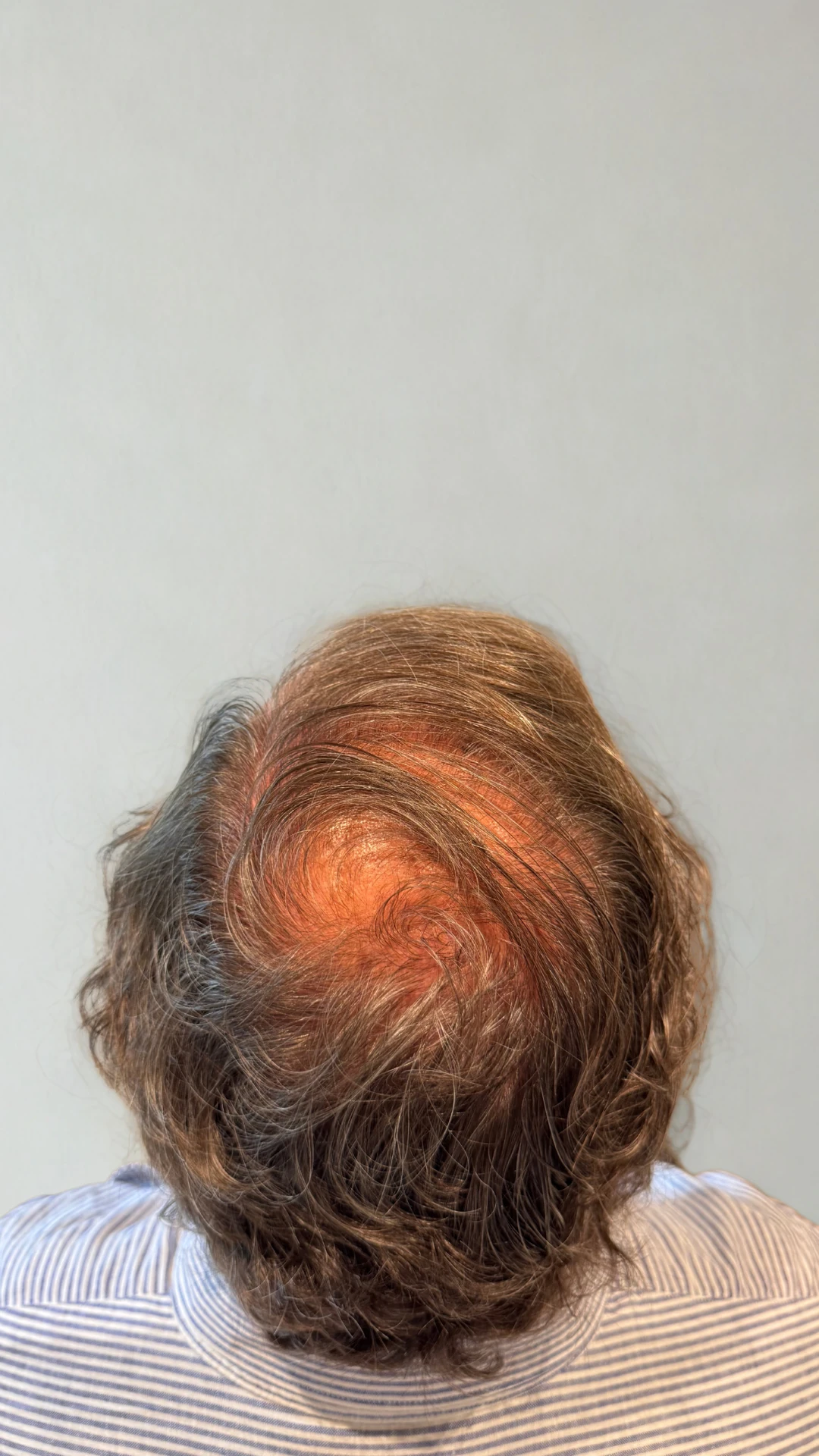
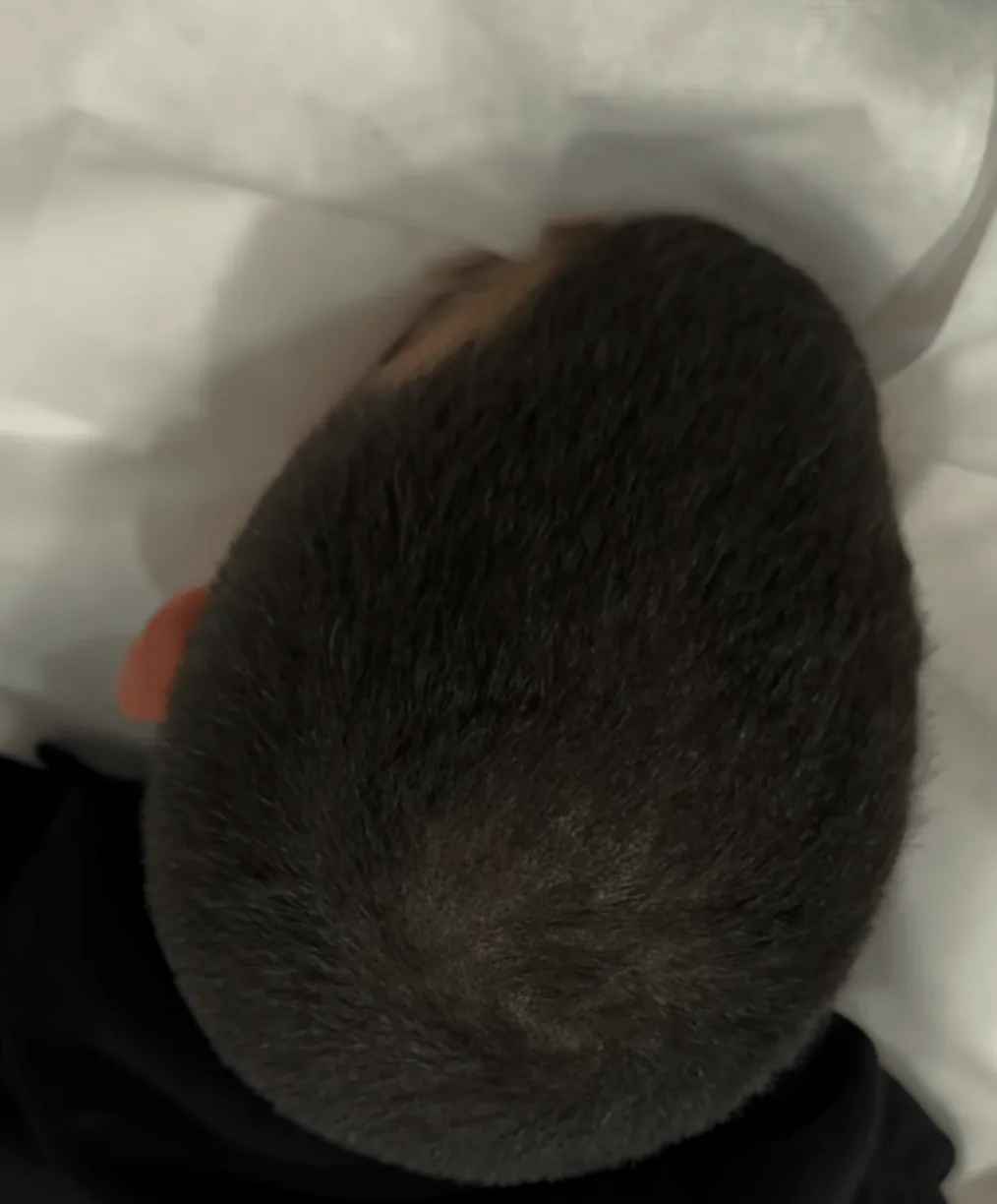
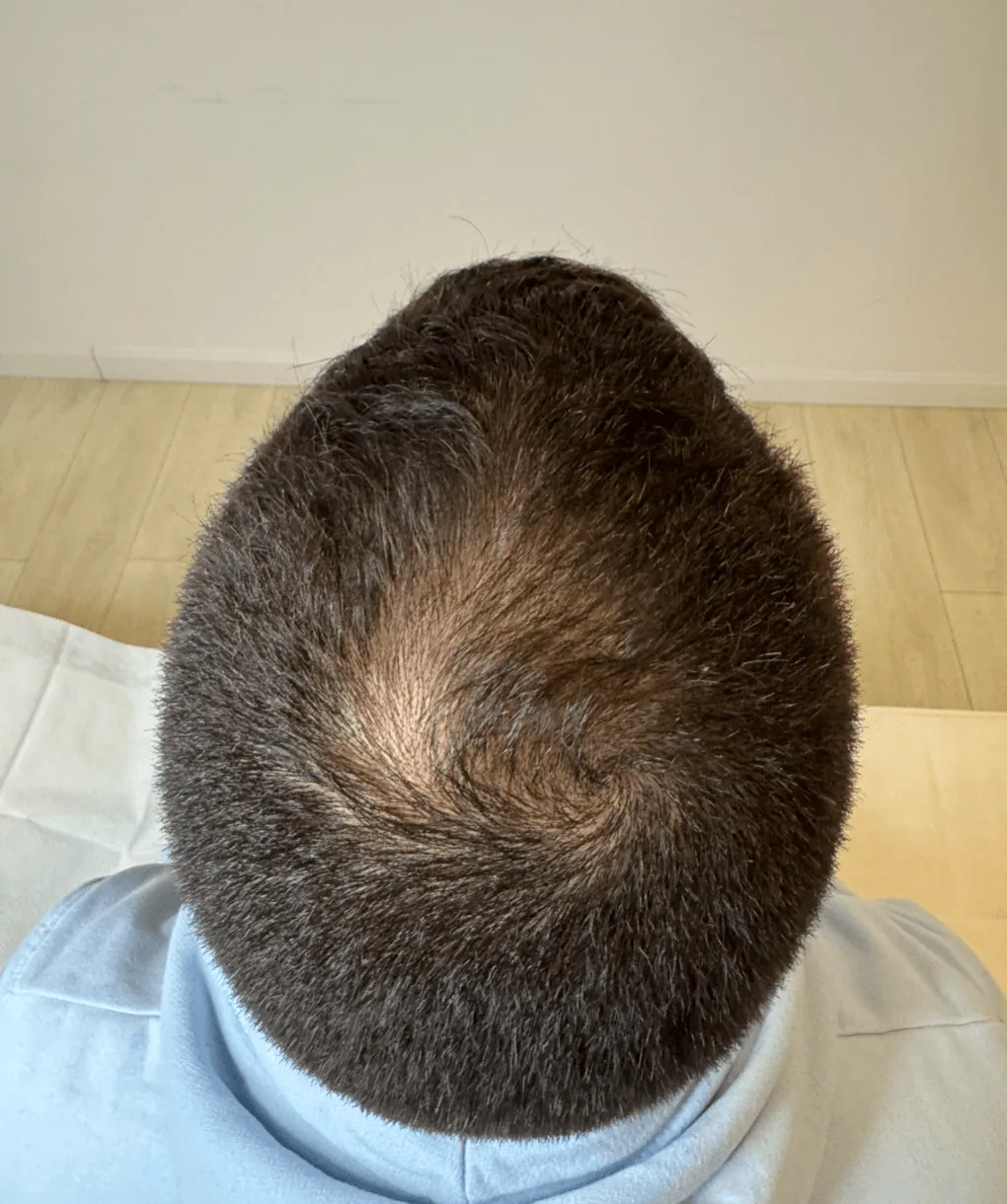
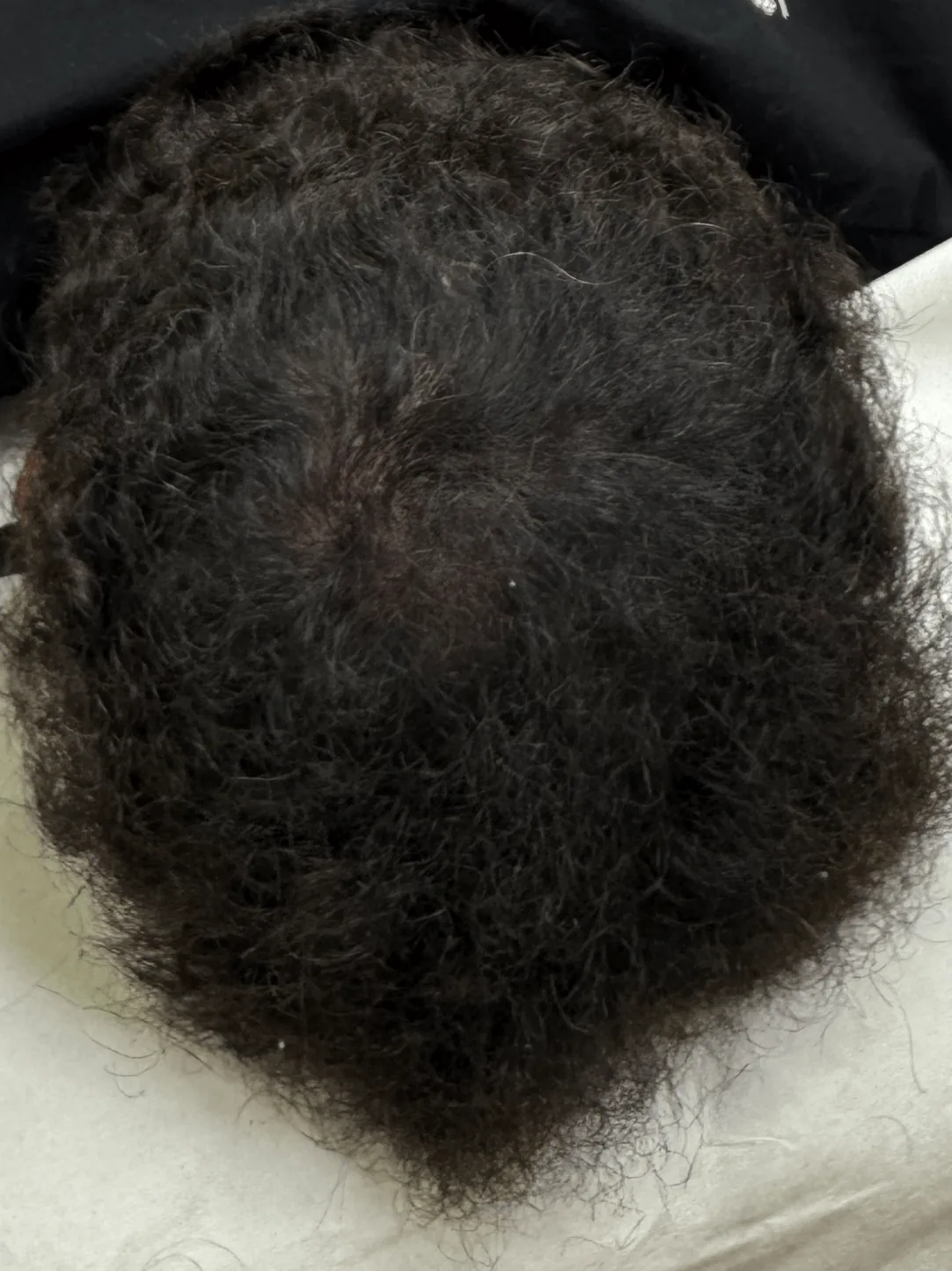
What does the density effect involve?
Density scalp micropigmentation is designed for people who still have hair, but have areas where the scalp is too visible. It does not add hair: tiny pigment dots are placed between existing hairs to visually reduce background contrast.
When the scalp is light and the hair is darker, every gap between hairs increases the impression of low density. By treating those spaces with an appropriate tone and intensity, the skin stands out less and the coverage can appear more even.
The aim is not to “paint” the scalp. The dots should maintain spacing, variation and integration with the real hair. An overly saturated area can become more noticeable than the lack of density itself.
Who may be suitable for it?
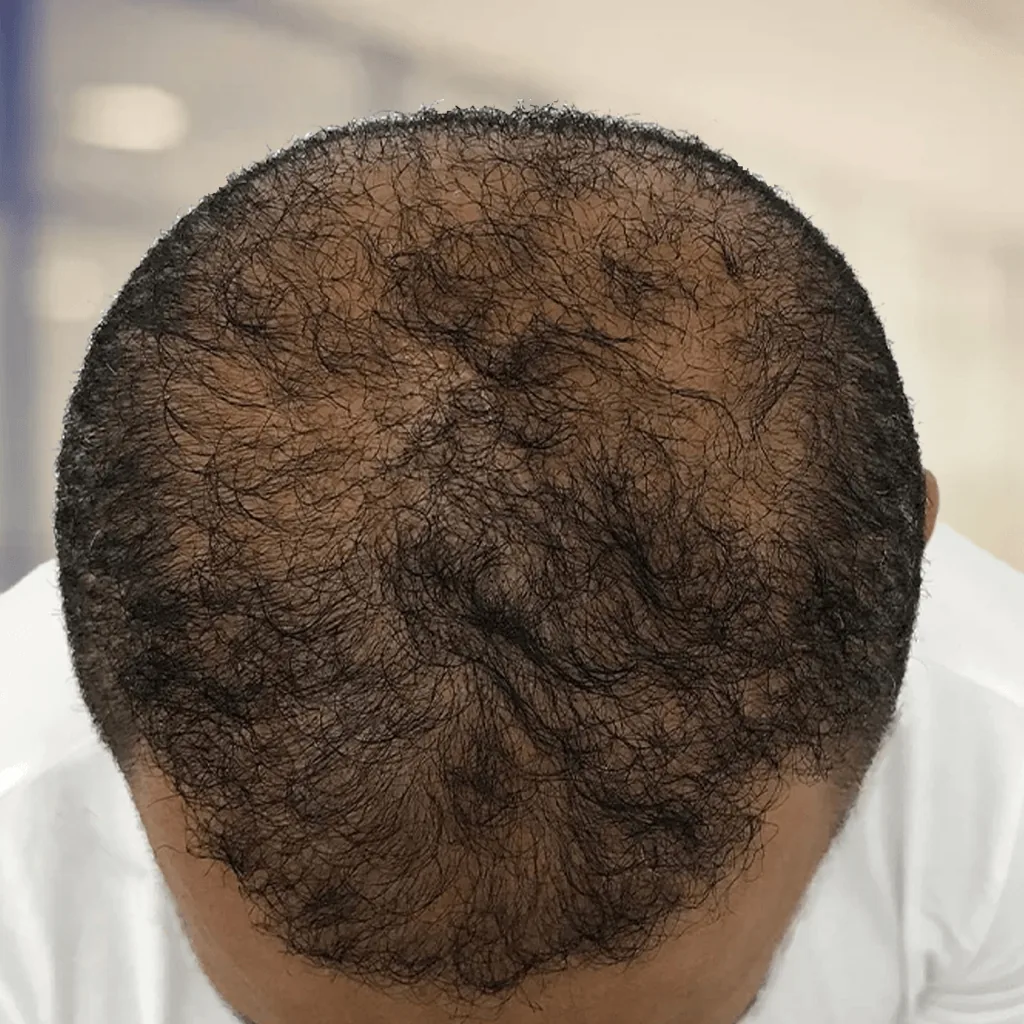
- People who still have hair but have visible thinning.
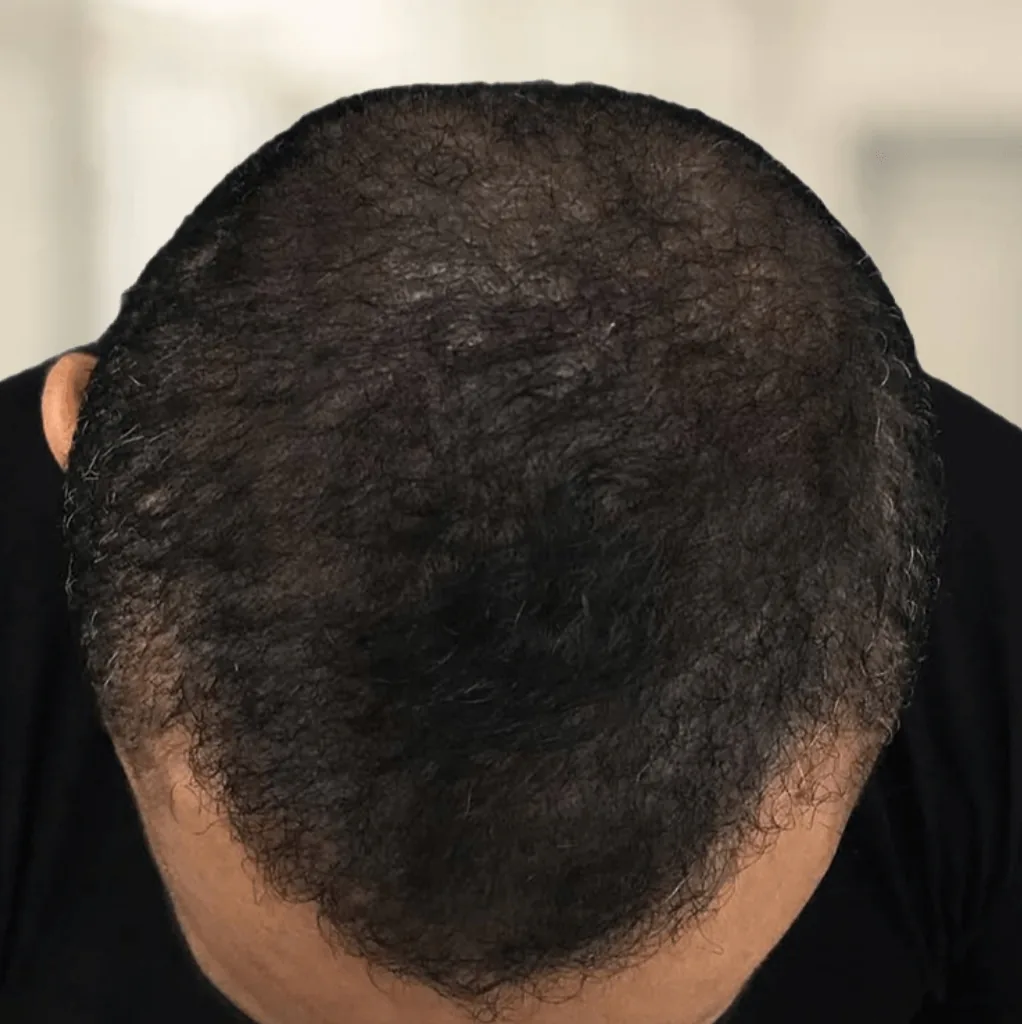
- Diffuse loss in the frontal or top area.
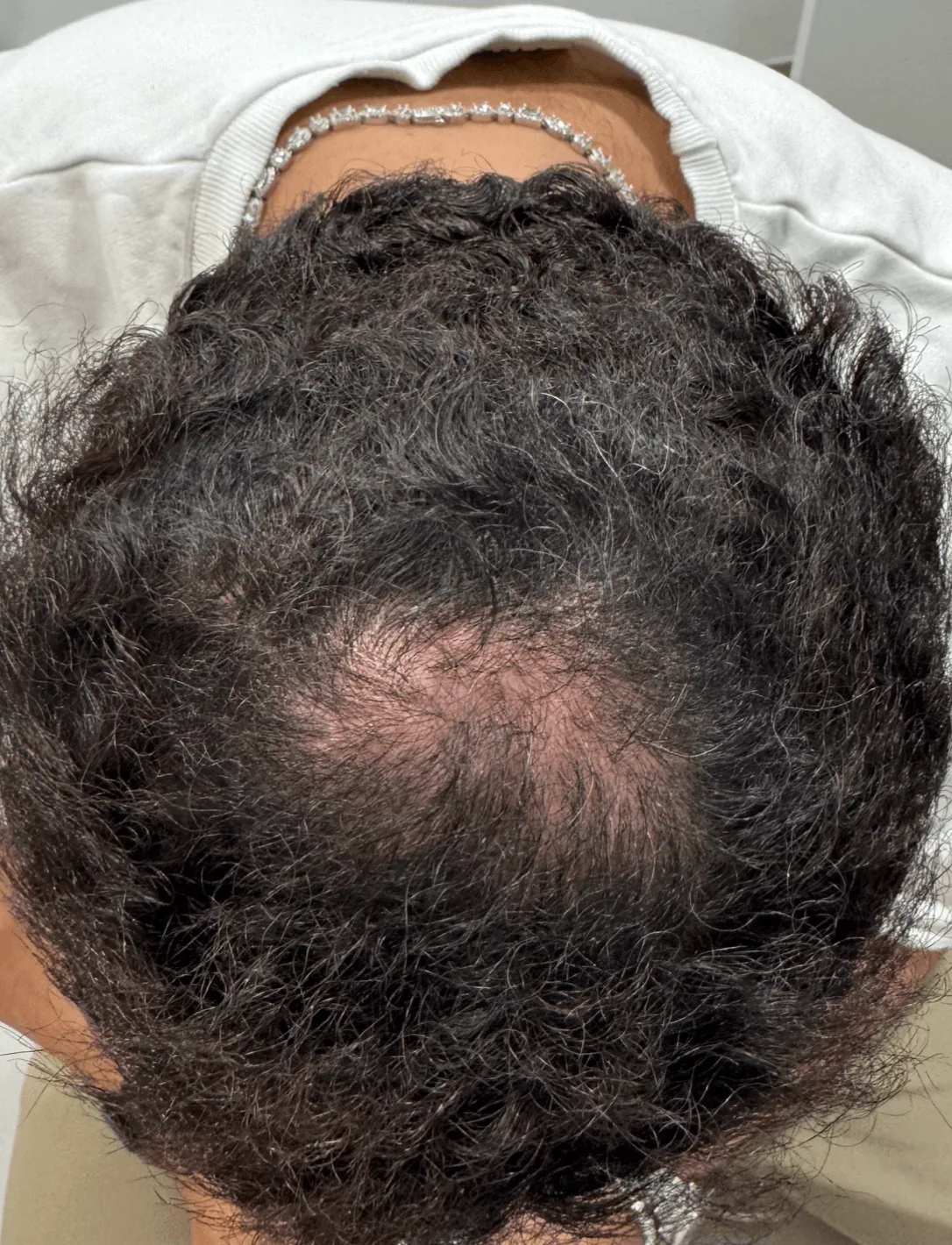
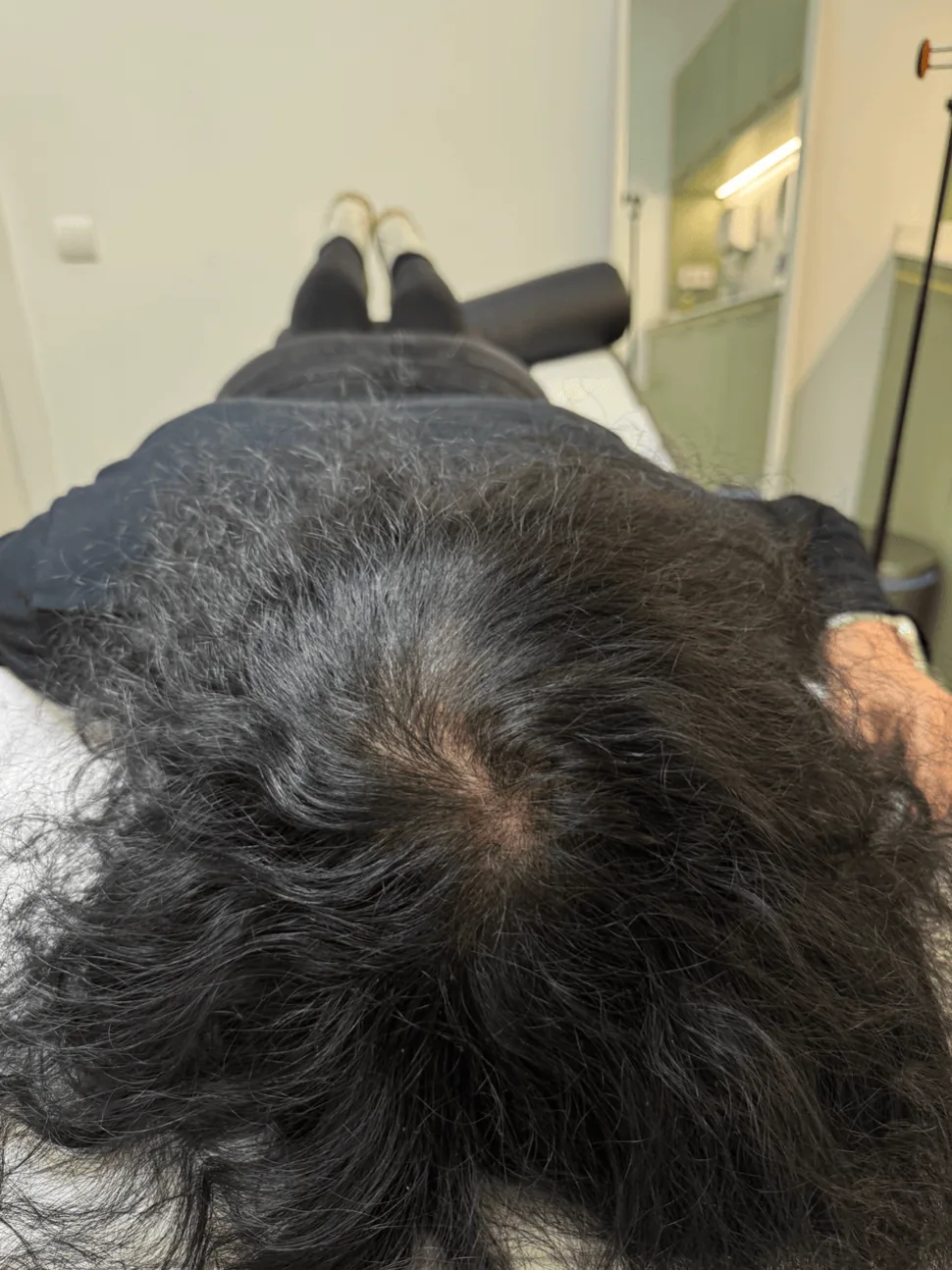
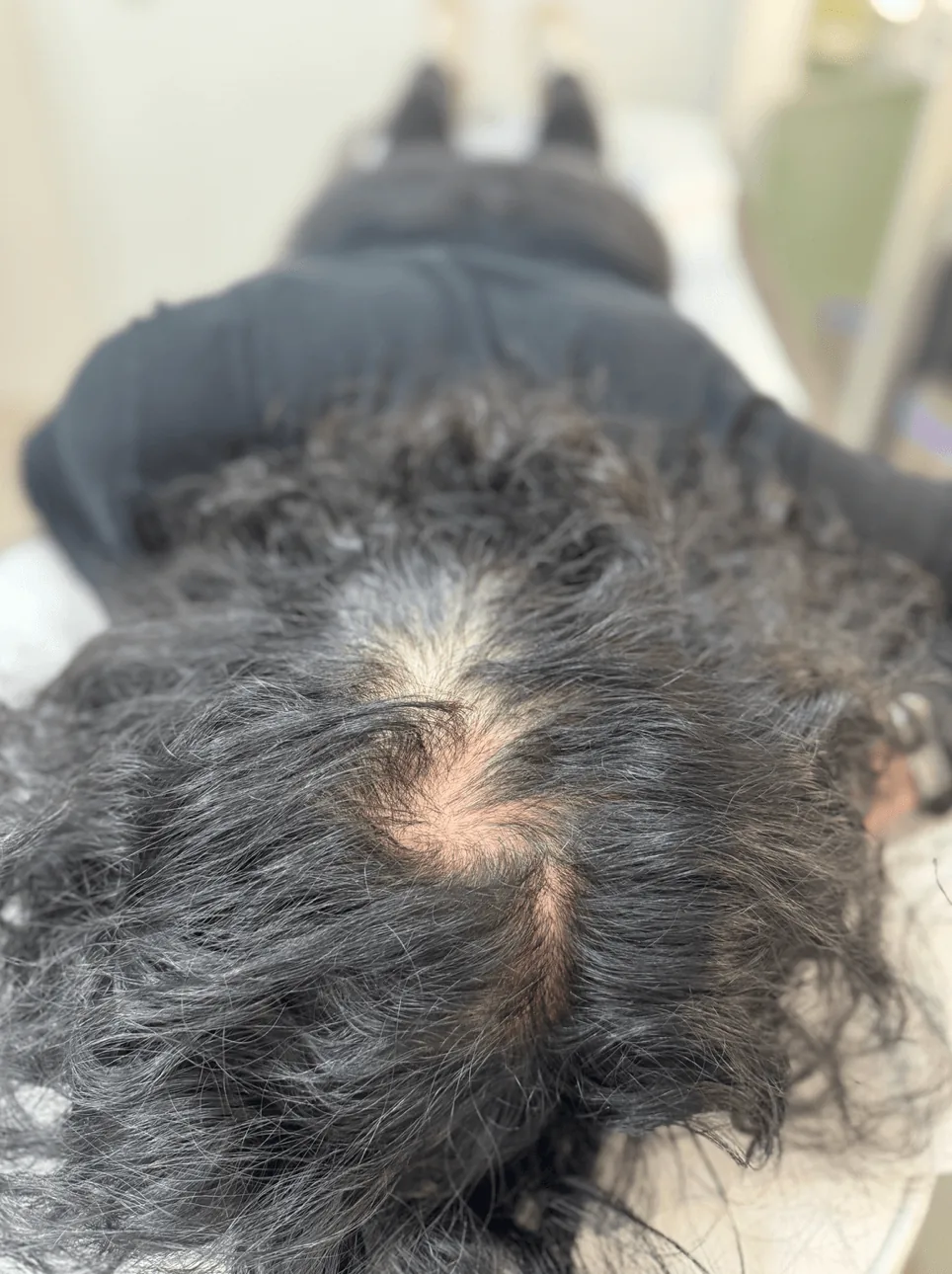
- Crown with lower density and scalp exposed to light.
- Fine hair that allows the scalp to show through despite existing coverage.
- Selected cases after a hair transplant.
- People who use hair fibres and want a visual solution that does not depend on daily application.
Crown micropigmentation
The crown requires special attention because the whorl changes the direction of the hair and light falls directly on the area. It should not be treated as an isolated circle: the pigment needs to blend progressively with adjacent areas so that no defined patch appears.
Do you need to shave for a density effect?
In many cases, no. This type of treatment is specifically performed between existing hairs. To properly assess longer hair, I need to see the scalp with the hair parted, which is why photographs from above may not be enough.
Why do I build density progressively?
Skin does not retain pigment in exactly the same way in every person or every area. In the first session I establish a conservative base. Once the evolution has been observed, later sessions allow reinforcement where needed and adjustment of the balance between pigment and real hair.
Density and alopecia: an important distinction
Micropigmentation can improve the appearance of density loss, but it does not treat the cause of hair loss. If there is active or sudden hair loss, inflammation or another scalp condition, the priority should be appropriate medical assessment.
How I assess a density treatment
Before planning treatment, I assess how much hair remains, how it is distributed, how much scalp is exposed and how the appearance changes under different lighting conditions. Hair colour and thickness, skin type and whether the loss is stable or still progressing also matter.
With long hair or good coverage, a surface photograph can hide the problem. It is therefore useful to part the hair by areas and assess the front, top, crown, sides and back. Micropigmentation should be designed around the actual hair loss, not only the area that concerns the patient most.
Natural appearance: tone, dot and distribution
A good density effect does not depend on making the scalp as dark as possible. It depends on finding a balance between pigment tone, the visual size of each impression, spacing between dots and the density the skin can support. The treatment should blend with the hair and still look coherent up close.
What happens after each session?
The initial appearance is not the final result. The skin goes through a healing process and the pigment settles. For that reason, sessions are spaced out and the next one is planned by observing how the previous session evolved. This approach allows controlled reinforcement without trying to achieve all the density in a single session.