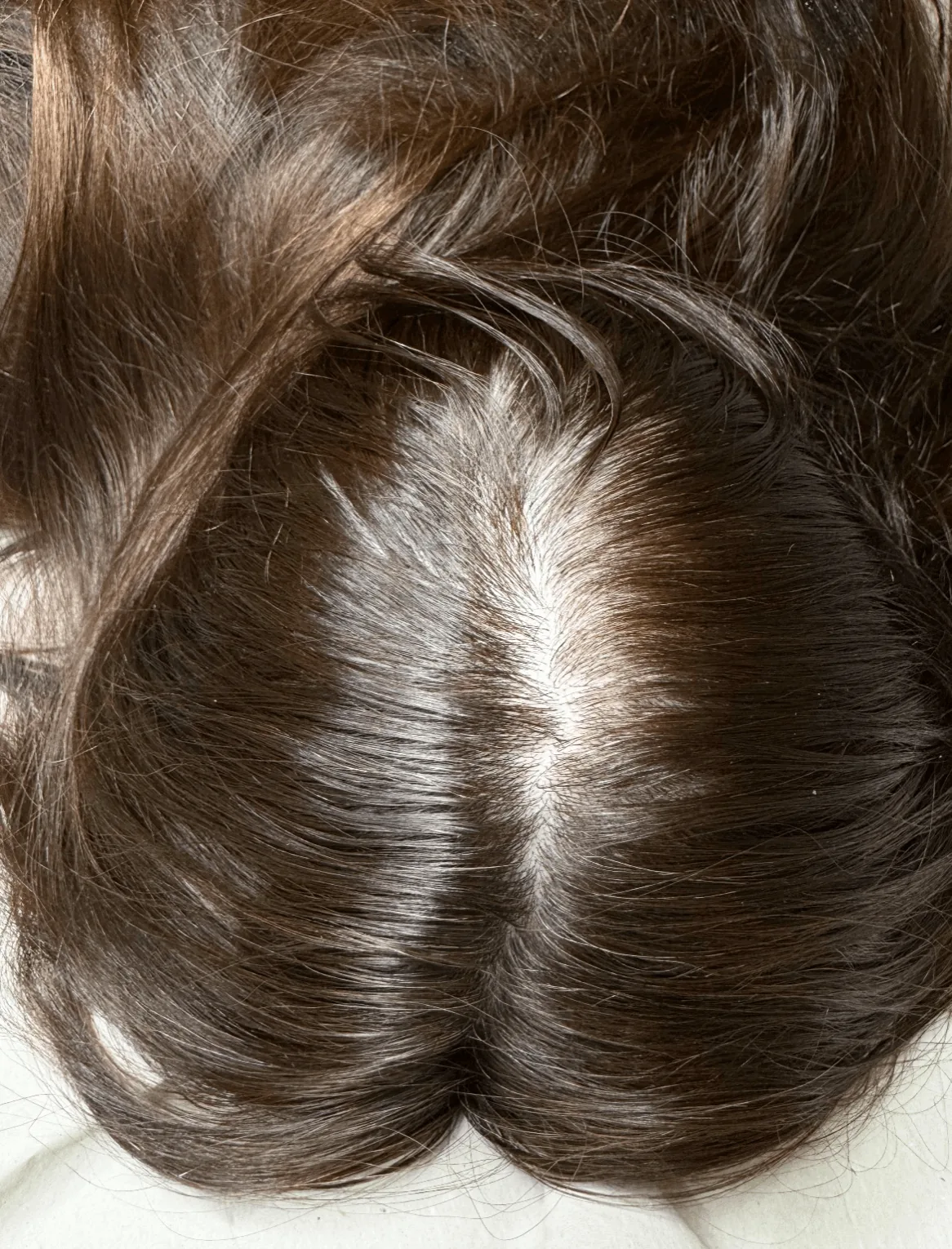
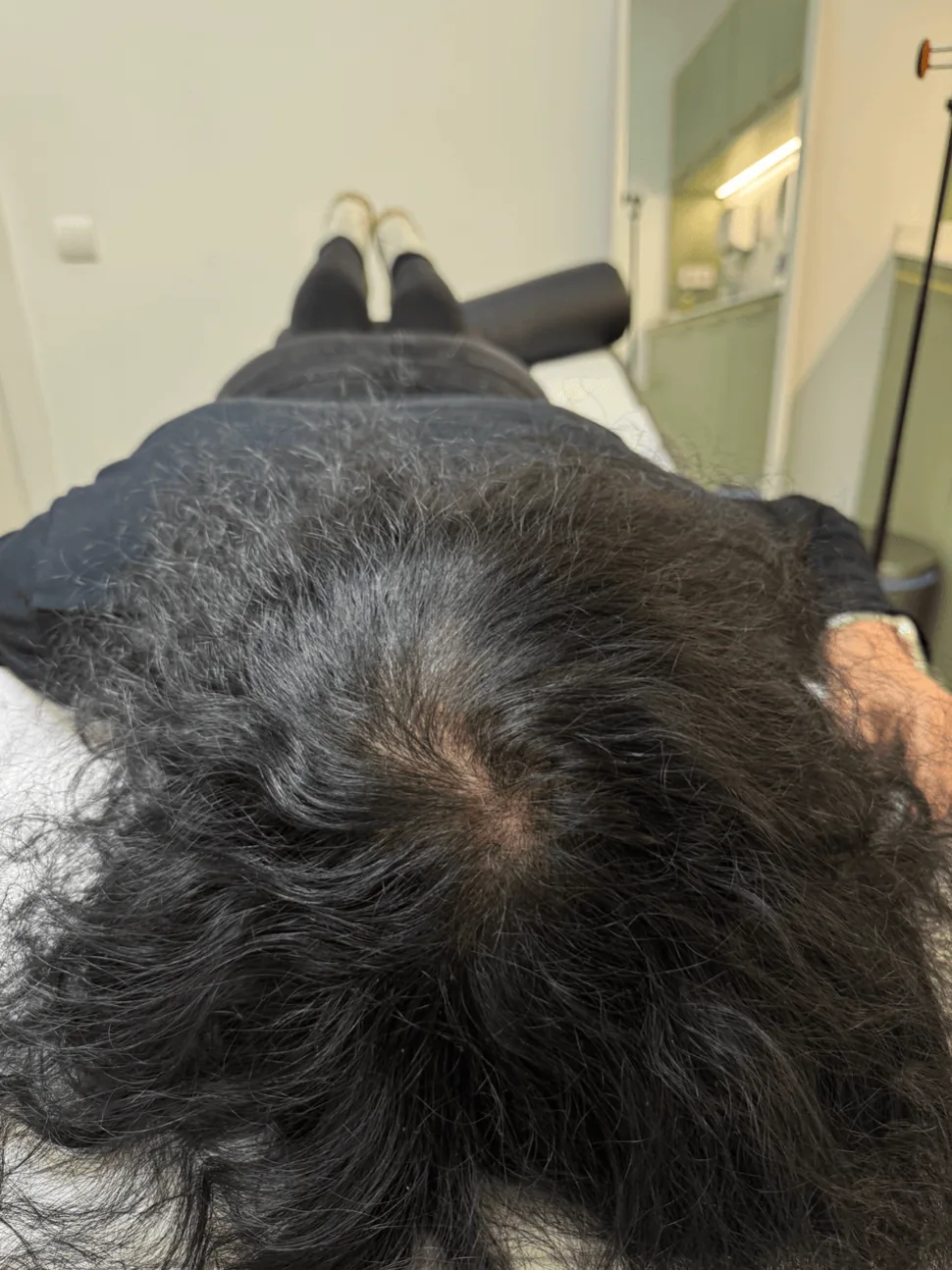
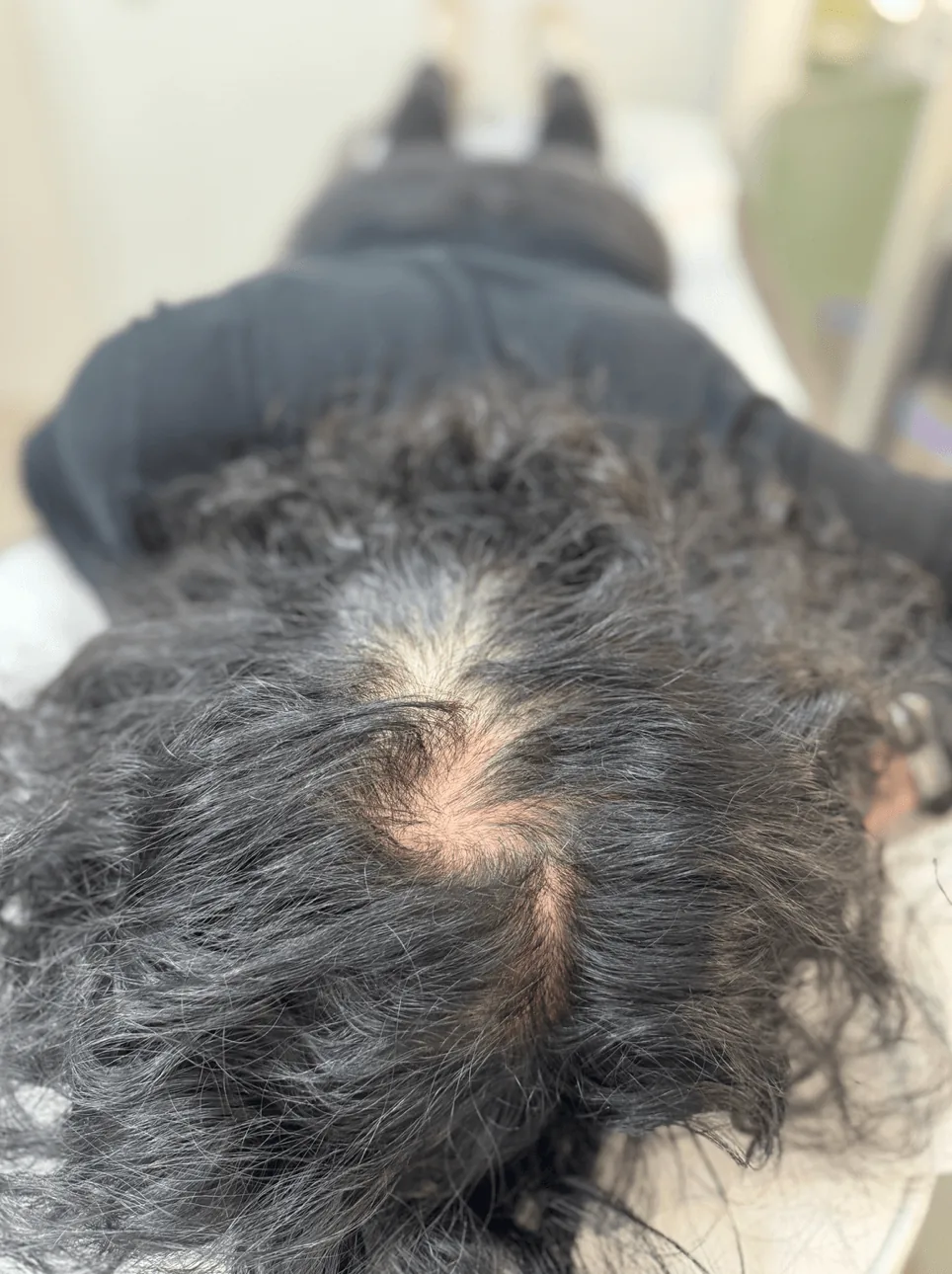
Female micropigmentation with existing hair
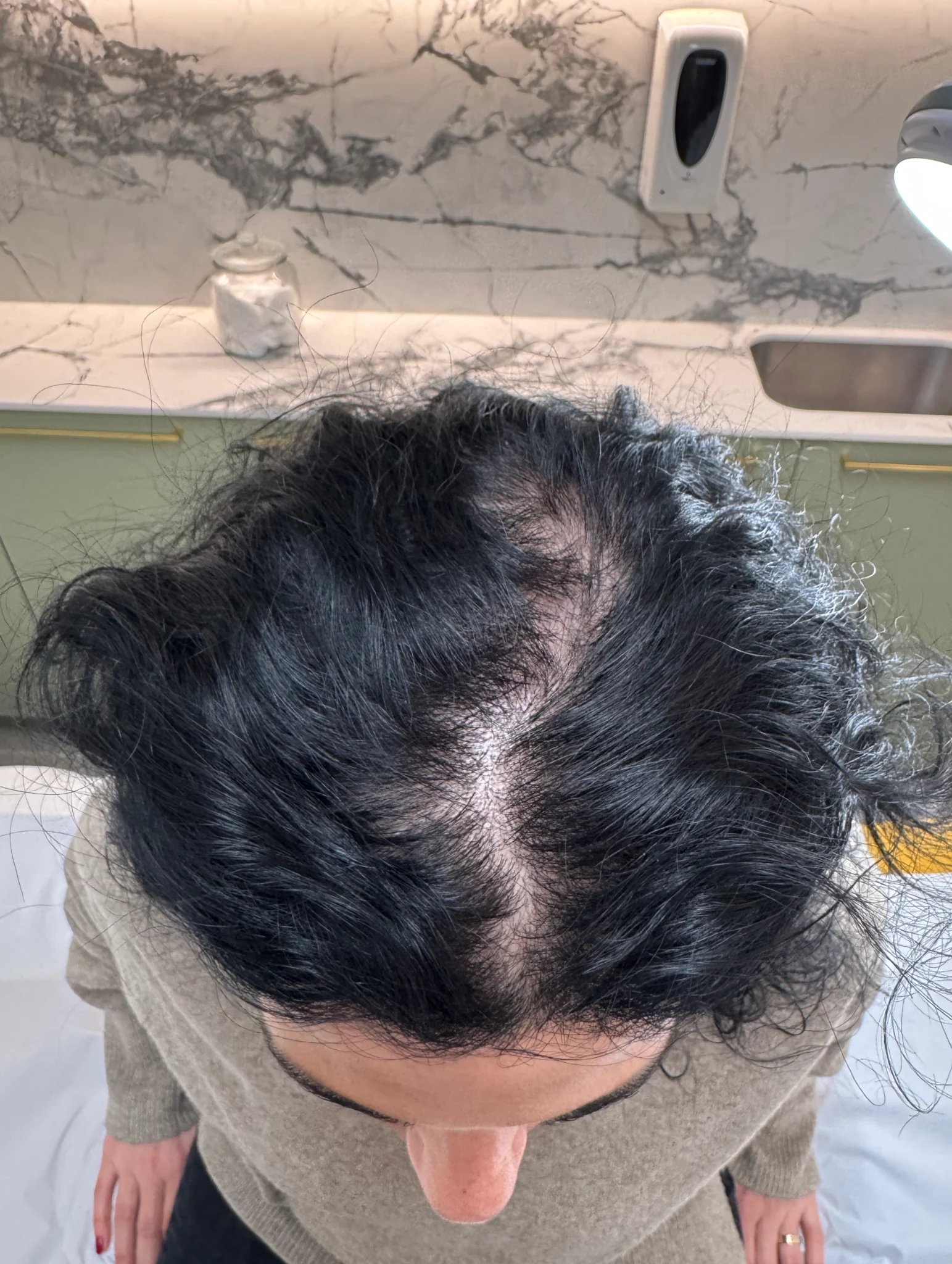
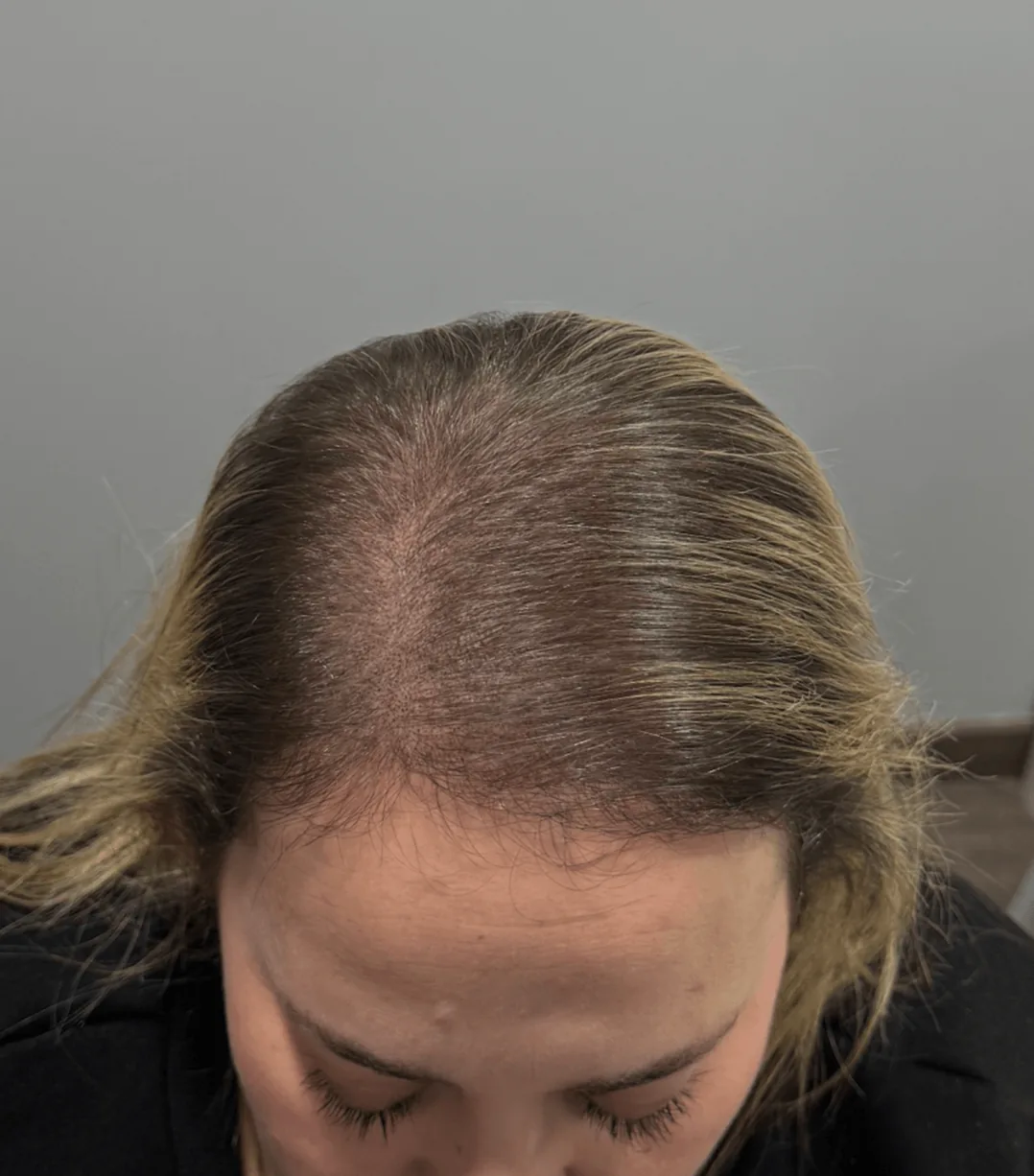
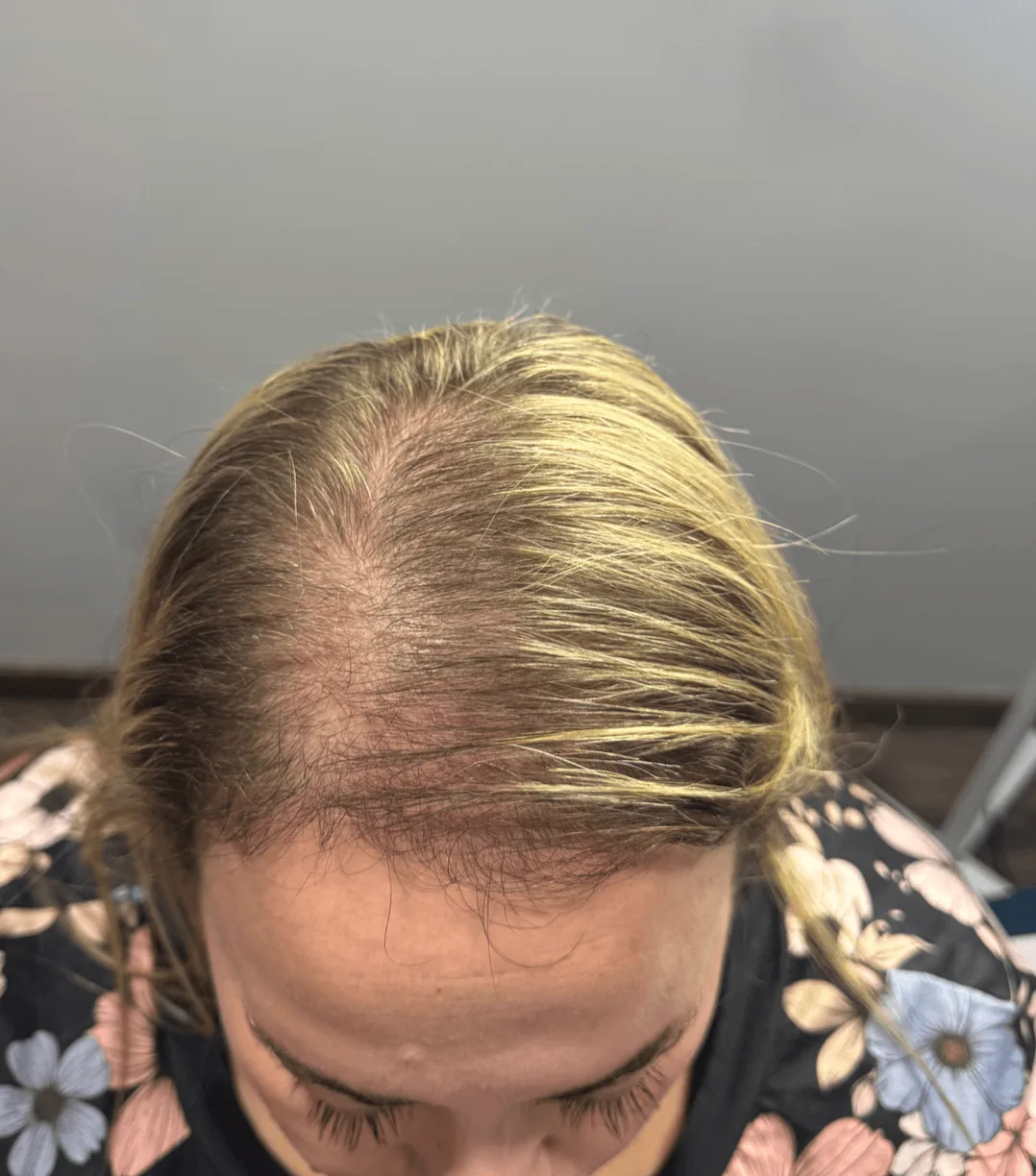
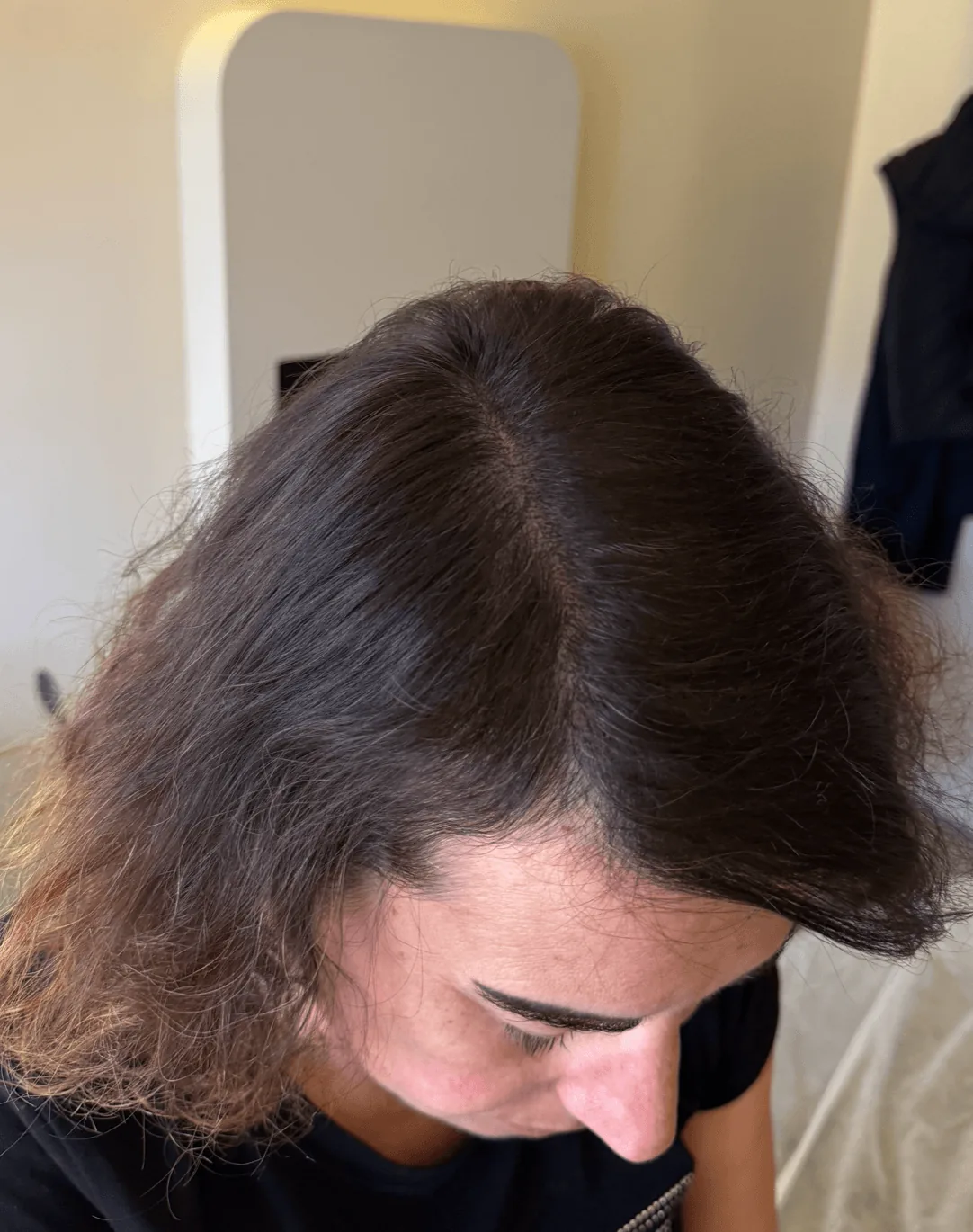
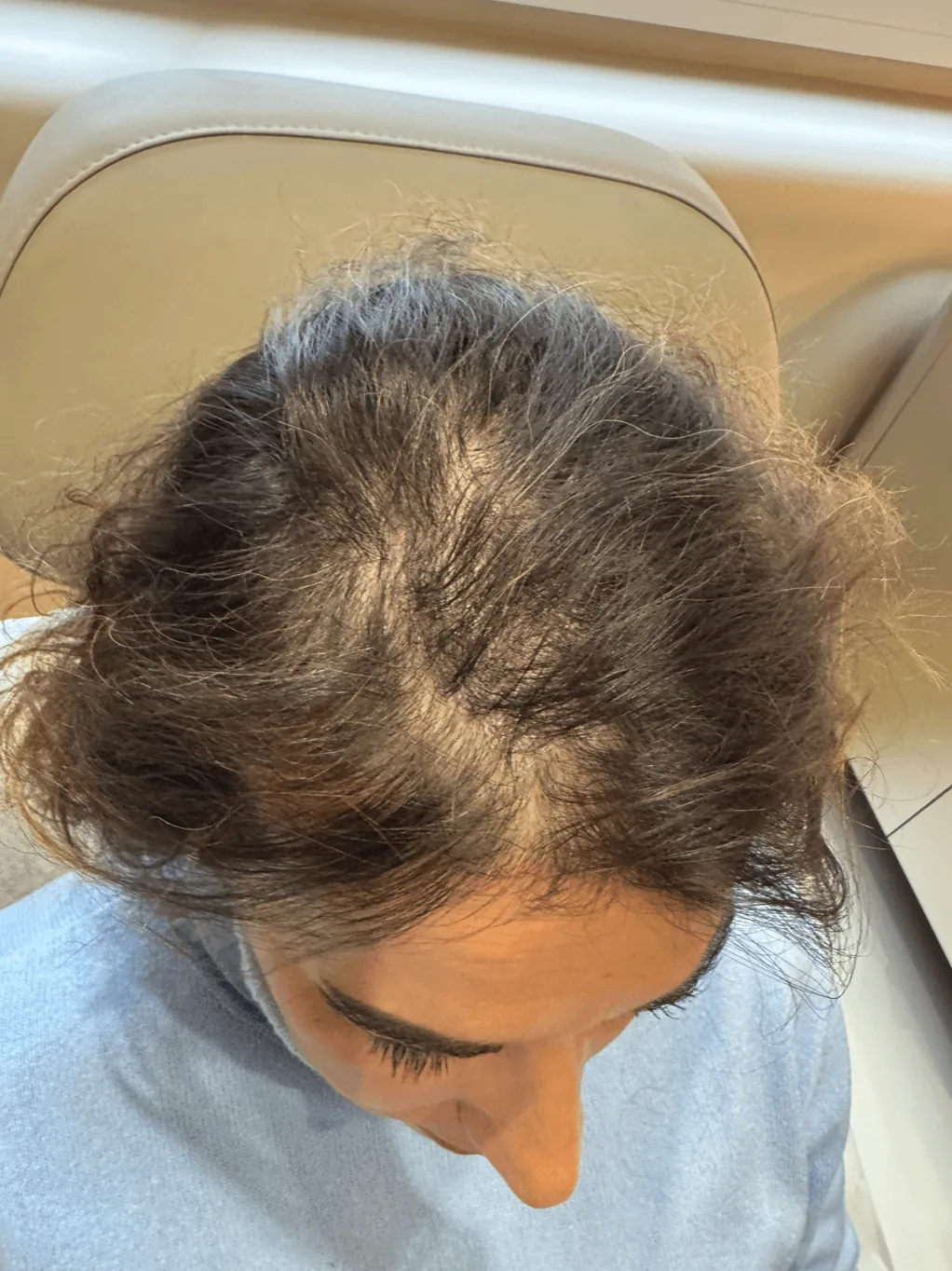
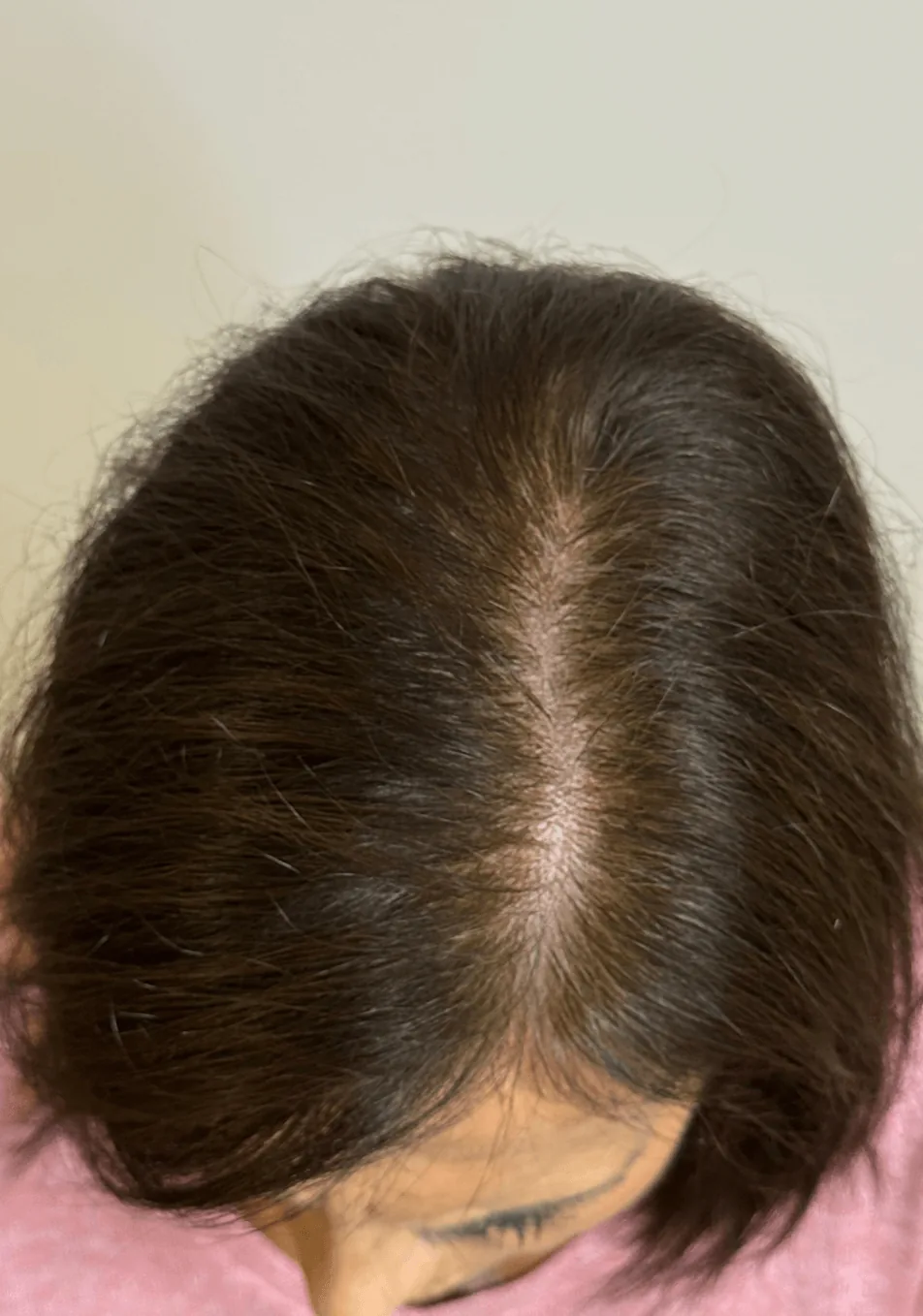
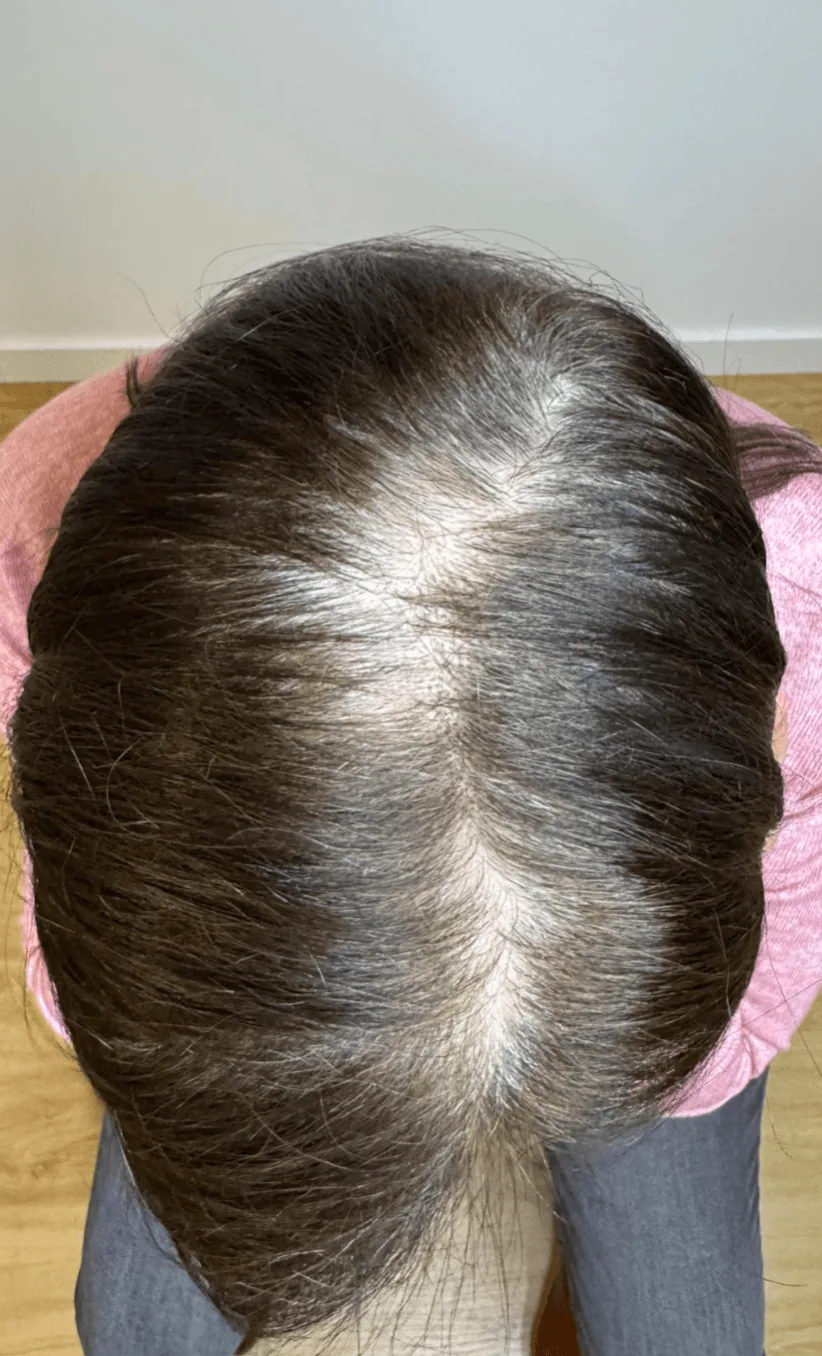
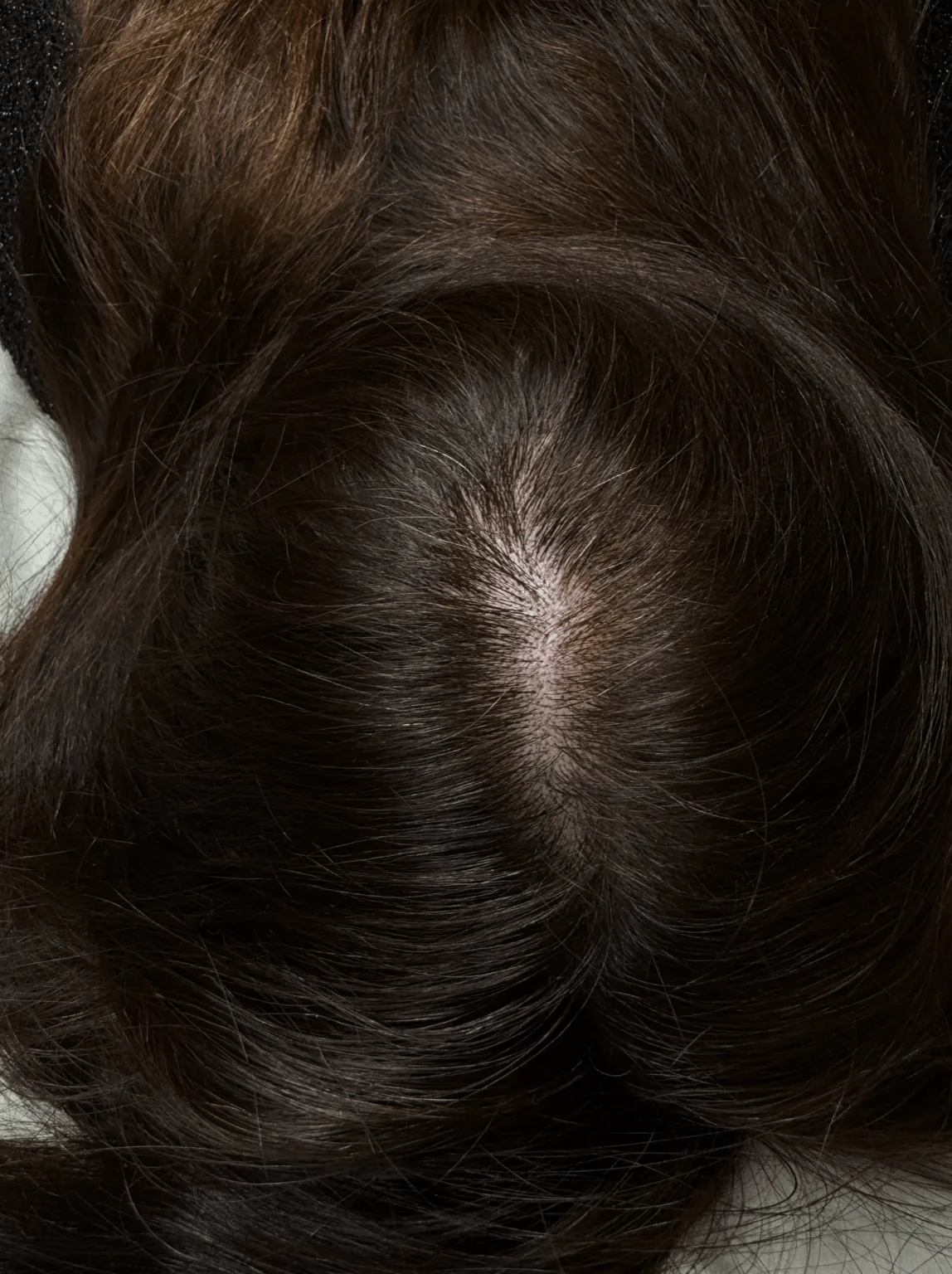
For women, scalp micropigmentation is usually planned as a density treatment. Tiny pigment dots are placed between real hairs so the scalp background contrasts less with the hair, especially in areas where visual coverage has decreased.
Which cases are assessed?
- Fine hair with visible scalp.
- Diffuse loss in the top area.
- A parting that has visibly widened.
- Specific areas with lower density.
- Some scars or posterior areas that require integration.
Suitability must be assessed individually. If there is active hair loss or a significant recent change, its cause should also be assessed by the appropriate healthcare professional.
Natural appearance: tone, size and density
The main challenge is to ensure the pigment visually blends between hairs of different thickness and colour. The work should avoid dots that are too large, dark or uniform and should be adapted to the area being treated.
How I assess cases remotely
I need well-lit photos from the front, sides, top, crown and back. When there is a good amount of hair, a short video parting it is also useful for properly assessing the scalp.
Results and expectations
The aim is for the scalp to attract less attention, not to visually replace the volume provided by hair. The best candidate is someone with enough real hair for the pigment to act as a background and blend with it.
How does the density effect work for women?
The aim is not to draw hairs or create physical volume. Tiny dots are distributed in the areas where the scalp is more exposed to reduce the visual difference between skin colour and existing hair. When properly indicated, the background appears less light and overall coverage can look more even.
Planning therefore needs to take into account hair thickness, colour, actual density, hairstyle and the areas that become visible under direct light. Not all types of density loss are treated in the same way.
Is it necessary to cut or shave the hair?
In a density treatment, the hair is normally kept. During the session it is parted into sections to access the scalp and distribute pigment between the existing follicles. The prior assessment helps determine whether there is enough real coverage for the effect to blend correctly.
How many sessions may be needed?
Micropigmentation is built progressively. I prefer not to try to achieve excessive density in the first session: first a base is established, the pigment's evolution in the skin is observed, and then intensity, distribution and integration are adjusted. The final number of sessions depends on the case.
Micropigmentation and active hair loss
Micropigmentation is an aesthetic solution and does not treat the cause of hair loss. If the loss is recent, severe, follows an unusual pattern or there is a scalp condition, the priority is an appropriate medical assessment before considering aesthetic treatment.
Why can micropigmentation work with long hair?
Because the aim is not to imitate long hair or draw individual hairs. The visible background between existing hairs is treated. When the contrast between scalp and hair is reduced, areas such as the parting, top or certain thinning areas can look visually denser.
Assessing women requires seeing the scalp
Hair volume can hide the true extent of density loss. To assess the case correctly, the scalp should be viewed with the hair parted and from different angles. This helps distinguish a localised area from more diffuse loss and design an even integration.
A result designed to go unnoticed
In female density work, the pigment should not become the focus. It should act as an optical background for the hair. That is why intensity is built progressively and adapted to tone, hair thickness, skin and the amount of coverage that remains.