
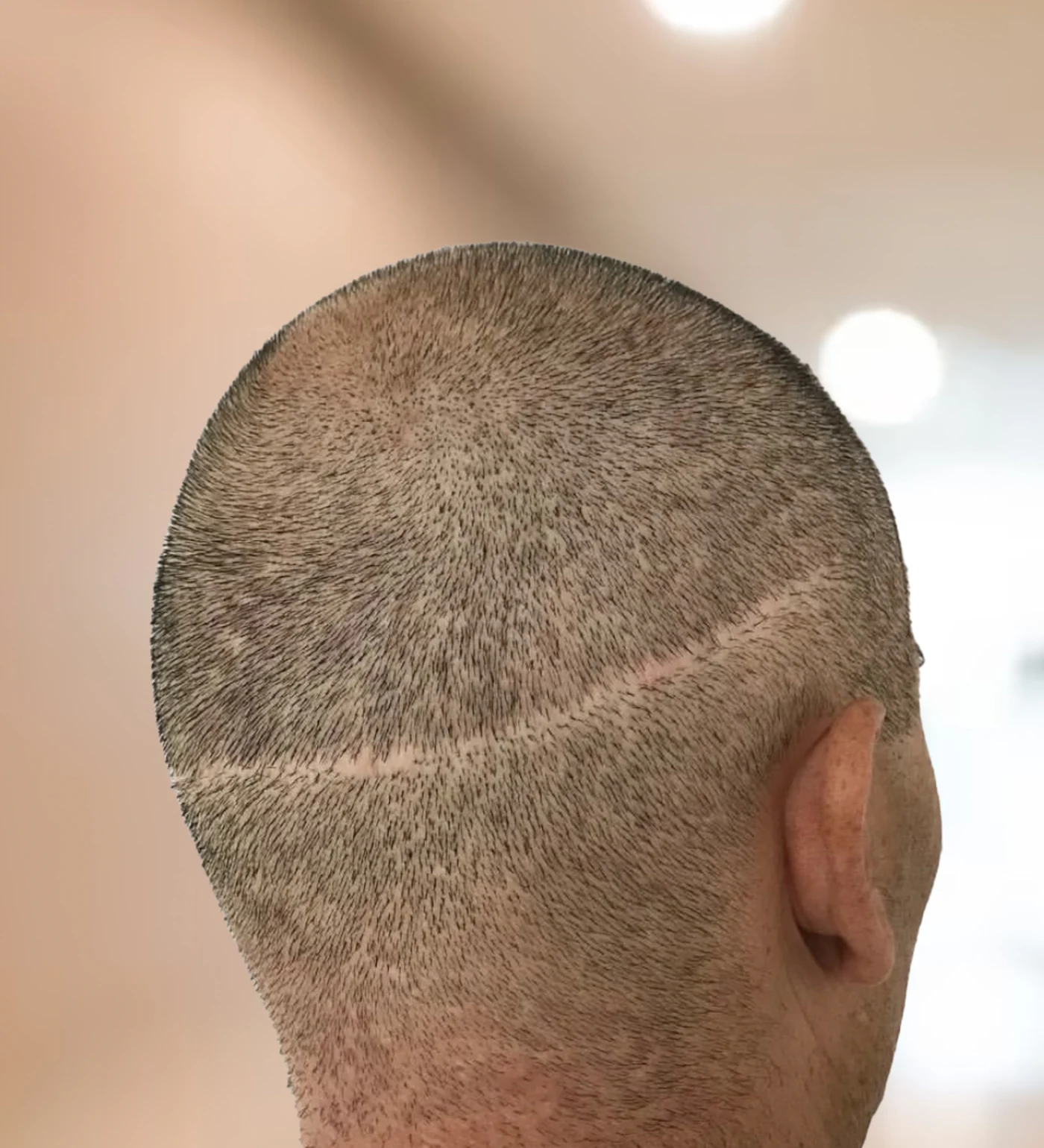
Camouflage does not mean removing a scar
The scar will still exist. Micropigmentation changes how it is perceived visually using pigment, aiming to reduce the difference in colour or coverage compared with the surrounding tissue and hair.
FUE scars
Follicular extraction can leave small lighter dots or lower overall density in the donor area. When the hair is worn short, these differences can become more visible and are assessed to determine whether pigmentation can blend them.
Linear FUSS scar
A linear scar presents a different challenge: scar tissue may retain pigment differently from the surrounding skin. It is therefore advisable to work conservatively and assess the response before increasing intensity.
Other scalp scars
Whether a scar can be micropigmented depends on its condition, colour, texture and stability. Not all scars are good candidates. If there is inflammation, recent change or uncertainty about the tissue, medical assessment should take priority before any aesthetic procedure.
Goal: integration
The pigmented area should connect with the existing pattern. Camouflage that is too dark can attract more attention than the scar itself, so a natural result requires a conservative approach.
Why does a scar require a different approach?
Scar tissue does not behave exactly like unscarred skin. Its texture, colour and retention capacity can vary, so treatment should be conservative and the pigment response observed between sessions. The aim is to reduce contrast, not to promise that the mark will disappear.
Donor area after FUE
After numerous extractions, small light dots or a difference in density between the donor area and surrounding hair may remain. In suitable cases, micropigmentation can add visual information to the background and make those differences less noticeable, especially with compatible hairstyles.
What determines the result
The type and age of the scar, its colour, texture, size, surrounding hair, skin tone and usual haircut length all influence the result. That is why I need clear photographs — and, where possible, a direct assessment — before confirming what level of camouflage is realistic.
Progressive treatment
With scar tissue, it is especially important not to rush intensity. Initial integration is created and the evolution reviewed before deciding how much to reinforce. This allows treatment to be adapted to the actual response of that skin.