
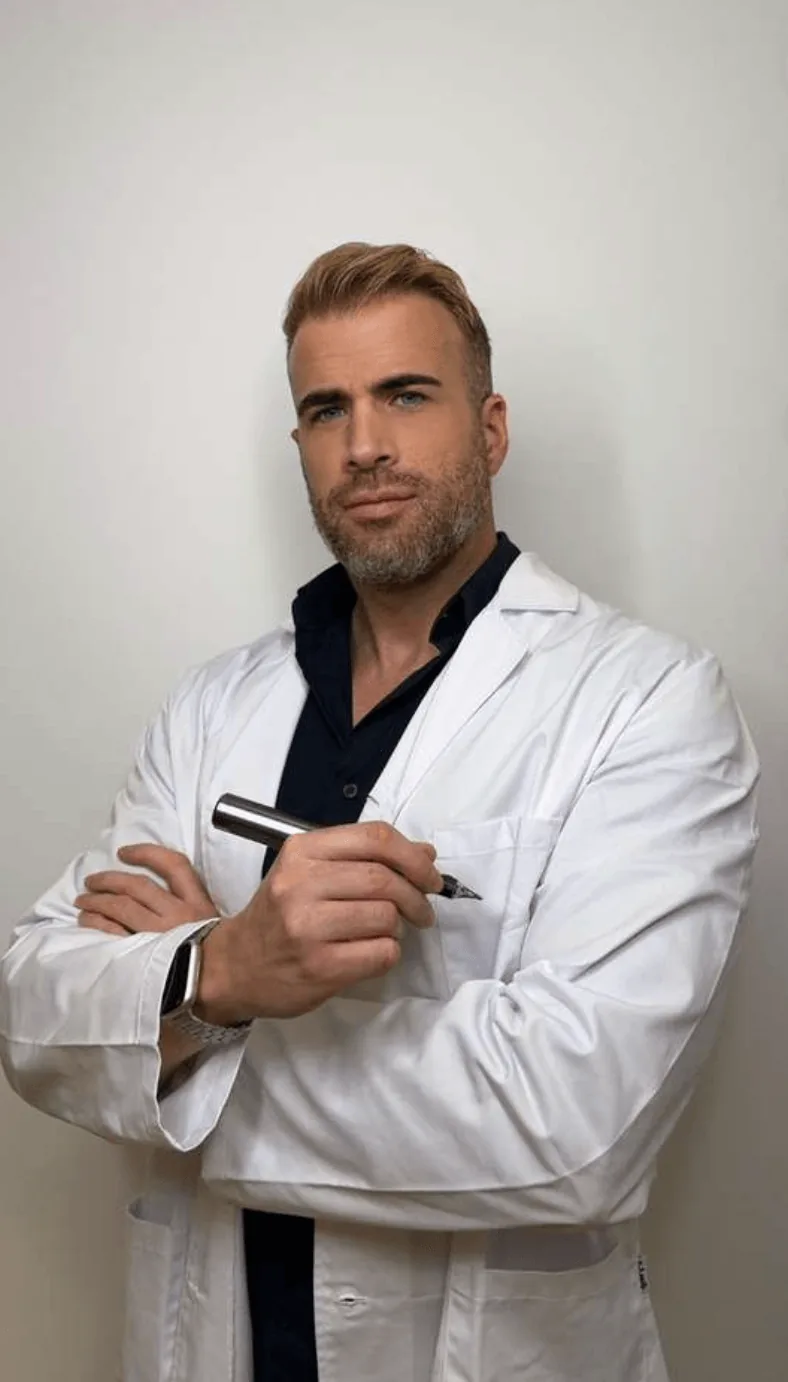
Specialisation in scalp micropigmentation
CapilArt BCN focuses on scalp micropigmentation. This makes it possible to adapt treatment to very different situations: density work between existing hairs, shaved-effect hairlines, crowns, scars, donor areas and cases that have already undergone a hair transplant.
My treatment approach
I prefer a conservative first session to an overly saturated initial session. The skin needs to show how it receives and retains the pigment. From there, density can be increased and adjustments made with much more information.
Natural appearance before intensity
Colour cannot be assessed in isolation: skin, hair, length and treatment area all need to be considered. Perception also varies between the frontal area, sides, crown and scarred areas.
A complete assessment
Even when someone enquires about one specific area, I assess the scalp as a whole to avoid creating a visual difference with nearby areas. This is particularly important after a hair transplant.
Appointments in Barcelona and surrounding areas
The initial assessment can be carried out remotely using photographs and video. When a case requires a more detailed review, an in-person appointment is arranged at one of the available partner centres.
What you can expect from the assessment
I will explain what micropigmentation can improve visually, what limitations exist, which areas I would treat and how I would plan the sessions. If I believe it is not the right treatment for your situation, it is equally important to say so.
Why I specialise in the scalp
Scalp micropigmentation has different requirements from other areas of cosmetic micropigmentation. The visual size of the follicle, hairline transition, integration between real hair and pigment, crowns, donor areas and scars all require a specifically hair-focused approach.
How I plan a treatment
Before discussing density or the number of sessions, I assess the whole picture: hair-loss pattern, remaining hair, colour and thickness, skin type, donor area, previous treatments and the patient's goal. I prefer to set realistic expectations and build the result progressively.
Micropigmentation as a complement to other treatments
I do not consider SMP a universal replacement for hair transplantation or medical treatments for alopecia. They are different tools. When appropriate, micropigmentation can visually complement a transplant or coexist with medical hair-loss care, without attributing functions to it that it does not have.
Follow-up and maintenance
Skin and pigment change over time. Sun exposure, skin type, aftercare and other factors influence that evolution. Maintenance is therefore assessed individually rather than at the same fixed date for everyone.
A specialisation focused exclusively on the scalp
Scalp micropigmentation has different considerations from other areas of micropigmentation: alopecia pattern, hair direction, contrast with the skin, shaved follicles, crown, transplanted areas and scars. My work focuses on these variables and on adapting each treatment to the patient's actual hair appearance.
My approach: build before saturating
I prefer the first session to provide a base we can build on. Once healed, the skin gives us useful information: retention, intensity and uniformity. That information allows better decisions in later sessions and helps us pursue an integrated result rather than maximum density from day one.
When micropigmentation is not the answer
Not every hair problem can be solved with pigmentation. When there are signs requiring diagnosis, sudden hair loss or an active scalp condition, aesthetics are not the priority. Likewise, if the patient's expectations cannot be achieved through an optical effect, I prefer to explain that during the assessment.